
The 15-Minute City: Urban Utopia or a Blueprint for Control?
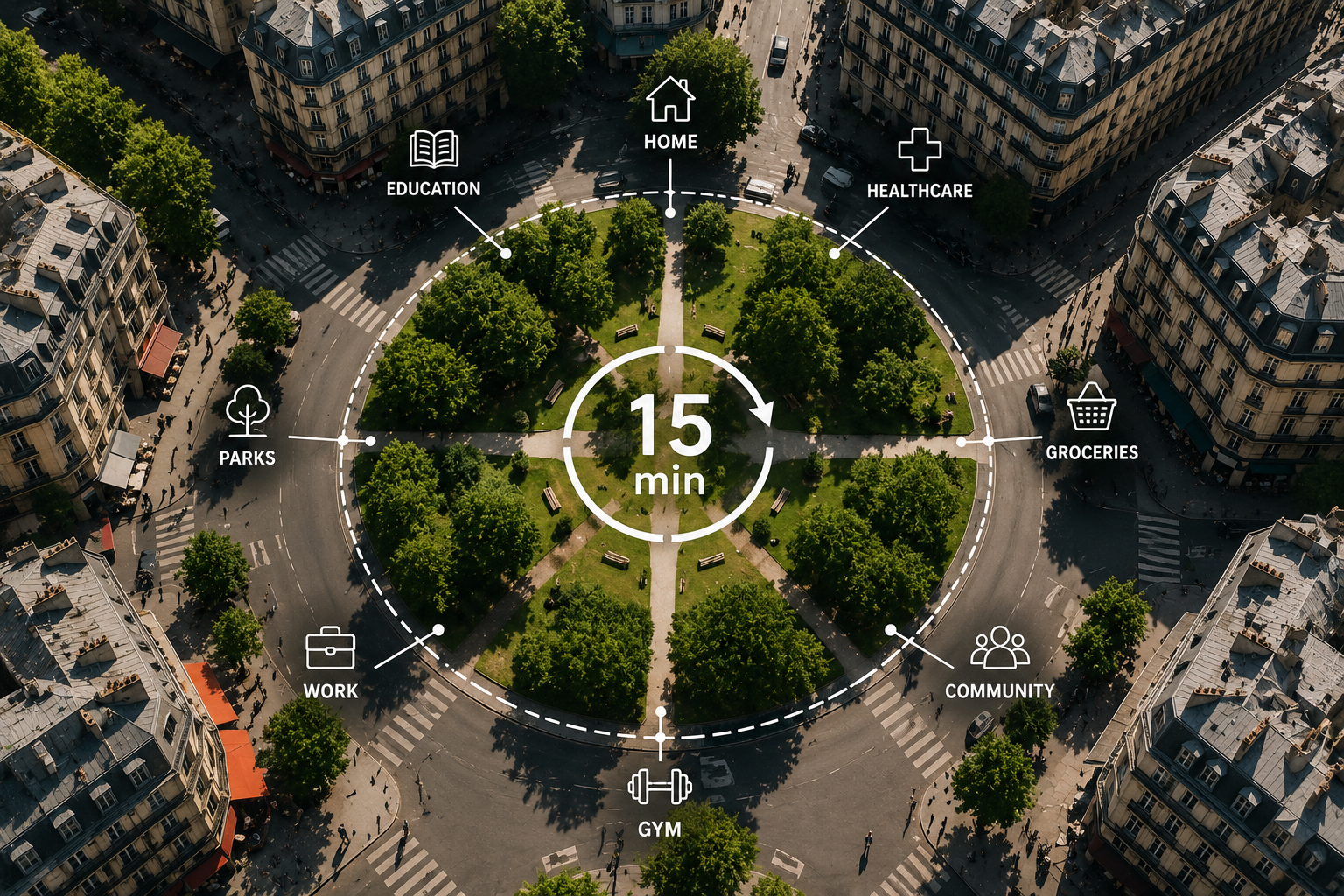
Everything you need within a 15-minute walk or bike ride — sounds ideal. But is the 15-minute city a blueprint for sustainable, people-centered urban living, or a framework for monitoring and controlling how citizens move through their own neighborhoods? Carlos Moreno, Jules Post, and Heather Lee weigh in.
Key Metrics
60%
Urban Populations Living in Compact Areas
30%
Reduction in Carbon Emissions Proposed
50%
City Planners Supporting 15-Minute Concept
As urbanization intensifies and climate change looms ever larger, the concept of the 15-minute city has emerged as both an appealing vision and a subject of contention. Is this model a solution to contemporary urban challenges, or does it represent a veiled agenda for increased control over city inhabitants?
Why This Matters Now
Cities worldwide are grappling with issues such as traffic congestion, air pollution, and social inequity. The COVID-19 pandemic has further accelerated discussions around urban planning and public health, highlighting the need for a more localized lifestyle. In this context, the 15-minute city — a design where all essential services and amenities are within a 15-minute reach — has garnered attention from urban planners, policymakers, and the public alike.
Perspective: Urban Utopia
Carlos Moreno — Professor, Université Paris 1 Panthéon-Sorbonne
Carlos Moreno, one of the leading advocates for the 15-minute city, champions the idea as a revolutionary approach that emphasizes accessibility and sustainability. He argues that this model can empower communities by promoting local economies, reducing carbon footprints, and enhancing social connections. Moreno envisions vibrant, self-sufficient neighborhoods where residents rely on local resources rather than distant, centralized options.
He asserts, "The 15-minute city is not merely a geographic layout but a deep rethinking of urban life that places people at its core. Social equity is built into its framework, ensuring everyone has access to essential services without needing extensive travel."
Jules Post — Urban Policy Analyst
Jules Post takes a more pragmatic approach, emphasizing the need for careful implementation of the 15-minute city. He acknowledges its potential benefits but stresses that urban planning must tailor specific neighborhoods to local needs. Post suggests that the concept requires comprehensive mapping of existing resources and community engagement to prevent possible inequities in service distribution.
He notes, "The 15-minute city must not become a one-size-fits-all solution; instead, it should be adaptable, ensuring that diverse populations experience genuine benefits."
Perspective: Blueprint for Control
Advertisements
Heather Lee — Urban Sociologist
Conversely, Heather Lee presents a more critical perspective, cautioning against the 15-minute city's potential pitfalls. She argues that while the model proposes localism, it can also lead to increased surveillance and control by authorities. Lee warns that, under the guise of promoting convenience, city planners might implement systems that monitor citizen movements and activities more closely.
She claims, "The allure of the 15-minute city may mask a desire to regulate urban life. What appears as convenience could translate into a form of soft control, restricting freedom under the pretext of enhanced community engagement."
Synthesis of Perspectives
Where Experts Agree
All experts concur that the 15-minute city must be tailored to the unique needs of each community to ensure its success. There is consensus on the importance of accessibility to services and amenities as a central goal of urban design. The necessity of community involvement in planning and implementation is highlighted across all perspectives.
Where Experts Disagree
Moreno and Post view the model largely as a vehicle for positive change, while Lee poses critical questions regarding potential surveillance and control implications. While Moreno views flexibility as a natural part of urban evolution, Lee sees a structuring that could eliminate diverse lifestyles.
Why This Matters
The discourse surrounding the 15-minute city is emblematic of broader issues facing urban populations today. It raises critical questions not only about architectural design but also about social equity, community agency, and personal autonomy.
As cities worldwide consider adopting this model, it is essential for policymakers to navigate these conversations thoughtfully. The promise of a 15-minute city lies in its potential to foster closer-knit communities and reduce reliance on cars, thereby tackling climate change and improving quality of life. However, without vigilant oversight, the allure of convenience might lead to unintended consequences that undermine the very fabric of urban freedom.
Ultimately, the debate over the 15-minute city serves as a microcosm of contemporary urban challenges. As cities evolve, the collaborative effort of experts, urban planners, and local communities remains crucial in shaping environments that are inclusive, equitable, and genuinely beneficial for all citizens.


Editorial Take
Balancing Utopia and Control in Urban Planning
Cautiously OptimisticThe 15-minute city offers a promising vision, but its success hinges on careful and equitable implementation.
The 15-minute city concept represents a complex interplay between aspiration and apprehension. On one hand, the vision of accessible urban living promotes sustainability, fosters local economies, and can significantly enhance social equity. Advocates like Carlos Moreno illuminate the transformative potential of this model, painting a picture of vibrant, self-sufficient neighborhoods. However, as Jules Post wisely cautions, the implementation must be nuanced and responsive to the unique needs of different communities. Without proper oversight, the very ideals that make the 15-minute city appealing could be warped into mechanisms for surveillance and control. As we strive for a more sustainable urban future, it is crucial to navigate these waters with both hope and caution, ensuring that the well-being of citizens remains at the forefront of any urban policy decisions.
What do you think?
Cast your vote on this debate.
Continue the Debate
Related topics emerging from this analysis:
The Economic Impact of the 15-Minute City: A Double-Edged Sword
Exploring how the transition to 15-minute cities could reshape local economies, from small business opportunities to potential job losses in centralized industries.
Privacy in the 15-Minute City: Urban Design vs. Surveillance
Examining the concerns of surveillance and data collection in urban planning, questioning whether increased accessibility comes at the cost of personal privacy.
Cultural Implications of the 15-Minute City: Preserving Diversity
Investigating how the 15-minute city model can affect cultural neighborhoods, potentially leading to cultural homogenization or, conversely, strengthened community identities.
Transportation Redefinition in the 15-Minute City: Are Cars Obsolete?
Debating the future of transportation in urban areas adopting the 15-minute city model and whether car usage will diminish or evolve, considering public transit needs.