
The Housing Crisis: Market Failure, Government Negligence, or Both?
With homeownership slipping out of reach for an entire generation, the debate over who is responsible — and who must act — has never been more urgent.
Key Metrics
30%
Percentage of Americans spending over half their income on housing
60%
Growth rate of homelessness in urban areas in the last year
45%
Homeownership rate in the lowest income bracket
FEATURED ANALYSIS · EXPERT DEBATE
The Housing Crisis: Market Failure, Government Negligence, or Both?
Page Excerpt:
With homeownership slipping out of reach for an entire generation, the debate over who is responsible — and who must act — has never been more urgent.
Context
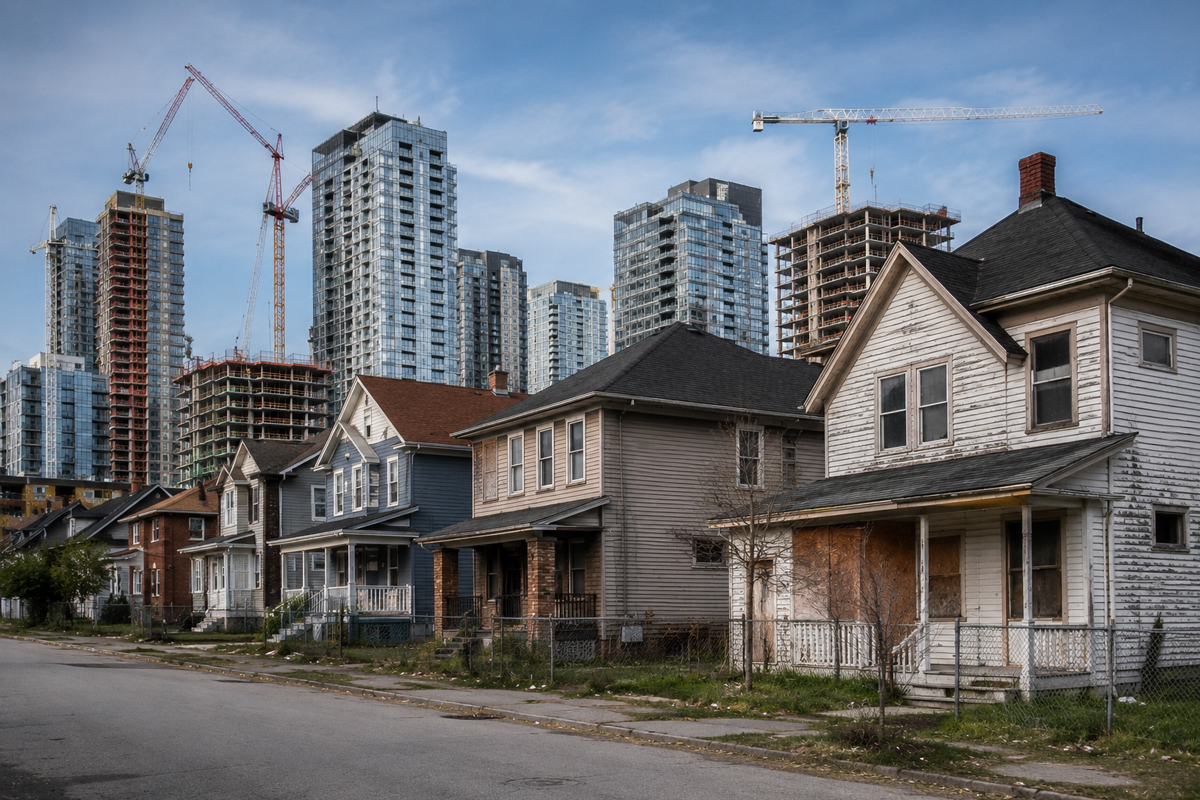
The urgency of the housing crisis has been exacerbated by a range of factors, including a post-pandemic economic landscape, shifting demographics, and increasing income inequality. Housing affordability has reached critical levels — according to some estimates, around 30% of Americans now spend more than half of their income on housing. The implications of this crisis extend beyond mere economics; they touch on social stability, public health, and quality of life.
Expert Perspectives
Perspective: Market Failure — Richard Florida
Richard Florida, a prominent urban studies theorist, posits that the current crisis stems largely from market failure. He argues that the housing market has inadequately evolved to accommodate a shifting demographic landscape. With urban areas experiencing an influx of residents seeking employment and amenities, there has been a disproportionate demand for housing that far exceeds supply.
Florida emphasizes that such dynamics lead to increased rents and property prices, ultimately putting housing out of reach for many Americans. He notes that the lack of affordable housing stock and the slow response from developers to build new units reflect systemic inefficiencies in the market. Furthermore, Florida points to zoning regulations and land use policies that prioritize single-family homes over denser developments, exacerbating the shortage in affordable housing.
In Florida's view, this isn't simply a local problem; it's a national crisis that requires a reassessment of how urban planning is conducted across the U.S.
Advertisements
Perspective: Government Negligence — Senator Elizabeth Warren
U.S. Senator Elizabeth Warren takes a different stance, attributing a significant portion of the crisis to government negligence. In her analysis, federal and state policies have systematically favored large developers and corporate interests, leaving individual homeowners and renters in precarious situations. Warren argues that various tax incentives and zoning laws favor corporate landlords at the expense of community needs.
Moreover, she highlights that government intervention in the form of subsidies and low-income housing projects has often fallen short. In her opinion, decades of disinvestment from affordable housing programs have created a vacuum that the private market cannot fill. Warren calls for stronger regulatory measures to rein in excessive rent increases and protect vulnerable populations.
Perspective: A Combination of Both — Robert Shiller
Renowned economist Robert Shiller presents a more hybrid view, acknowledging that both market failure and government negligence play crucial roles in the ongoing crisis. He emphasizes the importance of behavioral economics in understanding why many individuals are priced out of the housing market. Shiller notes that speculative behavior among investors, combined with the belief that property values will continue to rise, exacerbates the problem.
Additionally, he argues that government policies can both alleviate and worsen these pressures. For instance, while certain tax deductions aim to make homeownership more accessible, they can inadvertently drive prices higher by increasing demand among affluent buyers. Shiller suggests that both the public and private sectors must engage in a more cohesive dialogue to effectively address the housing crisis.
Editorial Synthesis
Where Experts Agree
- Shortage of Affordable Housing: All three experts agree that a notable lack of affordable housing significantly contributes to the crisis.
- Need for Policy Reform: There is consensus on the necessity for comprehensive policy reform, whether that means reevaluating zoning laws or ensuring fair housing practices.
- Impact of Speculation: The speculative nature of the housing market is acknowledged by all as a contributing factor that drives prices upward.
Where Experts Disagree
- Attribution of Blame: Warren sees government negligence as the primary culprit, while Florida attributes the crisis mainly to market failure. Shiller believes it's a mix of both.
- Proposed Solutions: Warren advocates for more government intervention, whereas Florida emphasizes the need for market-driven solutions. Shiller calls for a synthesis of approaches from both sectors.
Why This Matters
The housing crisis is not a simple issue but a complex interplay of market dynamics and governmental policies. Understanding the perspectives of experts like Elizabeth Warren, Richard Florida, and Robert Shiller can provide a comprehensive view of the factors at play. As Americans face increasing housing insecurity, the need for effective solutions has never been more crucial. Policymakers must bridge the divide between market incentives and government regulation, fostering an environment where affordable housing can thrive.
The ongoing debate surrounding the housing crisis serves as a microcosm for broader socio-economic challenges in the United States. As stakeholders continue to grapple with this issue, the stakes are high. Housing affects not only individual livelihoods but the very fabric of communities across the nation.


Editorial Take
Navigating the Complexities of the Housing Crisis
Holistic Approach NeededBoth market and government factors contribute to the housing crisis, necessitating a combined response.
The current housing crisis is the result of both market failures and government negligence, creating a multifaceted dilemma that requires immediate action. Richard Florida's insights on the inadequacies of the housing market highlight the pressing need for more adaptable urban planning and innovative solutions to meet the demands of contemporary demographics. Simultaneously, government policies often lag behind the needs of the public, resulting in insufficient affordable housing options. Solutions must involve a collaborative effort between private developers and public policymakers to build a more sustainable and equitable housing landscape. Only through such comprehensive approaches can we hope to alleviate the immense strain on millions facing housing insecurity. As we analyze this crisis, it’s clear that awareness and accountability must prevail to initiate meaningful change.
What do you think?
Cast your vote on this debate.
References
Continue the Debate
Related topics emerging from this analysis:
The Role of Public Housing in Addressing the Crisis
Explore the potential of expanding public housing initiatives as a solution to the housing crisis, examining successful models and future implications.
Zoning Laws: The Hidden Barrier to Affordable Housing
Investigate how current zoning laws hinder the development of affordable housing and propose potential reforms to alleviate the crisis.
The Impact of Gig Economy on Housing Affordability
Analyze how the rise of freelance and gig economy work affects housing stability and affordability for a growing segment of the population.
The Role of Technology in Revolutionizing Housing Solutions
Examine how technology, such as modular housing or smart city planning, can provide innovative solutions to the housing crisis and reshape urban living.