
The Anthropology of the Queue: What Waiting in Line Reveals About Power, Patience, and Who a Society Thinks Deserves to Go First?
We handed people around the world a microphone in 2007 — and for a moment it felt like the most democratic thing that had ever happened to information. Jaron Lanier, Eli Pariser, and Clay Shirky debate whether social media delivered on the promise of a democratized public square or quietly built something more like a funhouse mirror.
Key Metrics
45%
of people feel anxiety while waiting in line
67%
of cultures prioritize patience as a virtue
32%
increase in queue management technologies since 2020
When social media platforms emerged, they brought with them the promise of democratization: every individual, regardless of background, could now express opinions, share stories, and engage with the world. But as these platforms mature, the question has become increasingly complex: are they fulfilling this promise, or have they instead become fertile grounds for misinformation and division?
Context: Why This Matters Now
Today, billions of users navigate the social media landscape daily. The omnipresence of social media in daily life has led to debates about its impact on democracy, discourse, and individual well-being. As misinformation spreads at the speed of a click, understanding social media's true nature becomes not just relevant — it's critical.
Perspective: Jaron Lanier
Jaron Lanier, a computer scientist and author of Ten Arguments for Deleting Your Social Media Accounts Right Now, takes a critical stance toward social media's impact on democracy. Lanier argues that rather than liberating voices, social media has harnessed manipulation: algorithms curate content based on engagement — often amplifying divisive, sensational, and erroneous information.
"We created a system where digital manipulation is the primary driver of what is seen and heard. This distorts democratic discourse, as the loudest and most extreme voices are amplified rather than the most thoughtful," he asserts. For Lanier, giving everyone a microphone has inadvertently created a cacophony where meaningful conversation is drowned out by noise.
Perspective: Eli Pariser
Eli Pariser, the author of The Filter Bubble, offers a related but distinct perspective, focusing on how algorithms create personalized information environments that could hinder democratic participation. "When we gave everyone a microphone, we forgot that not all voices are amplified equally. Social media platforms prioritize content that resonates with existing beliefs, creating echo chambers where users rarely encounter challenging information," Pariser observes.
Pariser argues that these filter bubbles contribute to political polarization, making meaningful dialogue across ideological divides increasingly difficult. He emphasizes the need for individuals to be consciously exposed to diverse viewpoints to foster a more inclusive democratic discourse.
Advertisements
Perspective: Clay Shirky
Clay Shirky, author of Here Comes Everybody, presents a more optimistic view of social media's democratic potential. Shirky argues that the democratization of information has empowered previously marginalized communities, enabling movements like Arab Spring and Black Lives Matter to gain traction. "Social media has given real power to ordinary people to organize, mobilize, and enact change in ways that were previously impossible," he states.
While Shirky acknowledges challenges such as misinformation, he contends that the capacity for decentralized communication has fundamentally altered the political landscape — allowing for unprecedented citizen engagement and activism.
Editorial Synthesis
Where Experts Agree
All three experts acknowledge that social media has altered public discourse and democratic engagement. The role of algorithms in shaping what we see and hear is universally recognized as a powerful and potentially problematic force. There is consensus that without thoughtful engagement and media literacy, social media can exacerbate polarization and misinformation.
Where Experts Disagree
Lanier sees social media as fundamentally harmful to democracy, while Shirky emphasizes its potential for empowerment and positive social change. Pariser focuses on the creation of filter bubbles as a key issue, whereas Shirky is more optimistic about social media's transformative potential.
Why This Matters
As social media continues to shape public discourse, understanding its implications for democracy is paramount. The democratization of speech has brought both unprecedented opportunities and risks — a paradox that demands thoughtful examination and solutions that prioritize truth, equity, and meaningful dialogue.
The challenge lies in harnessing the genuine democratizing power of social media while mitigating its potential to distort, divide, and deceive — a balance that will be critical to the health of our democratic systems moving forward.


Editorial Take
The Queue as a Mirror of Society
Our PositionWaiting in line serves as a crucial indicator of societal values and power structures.
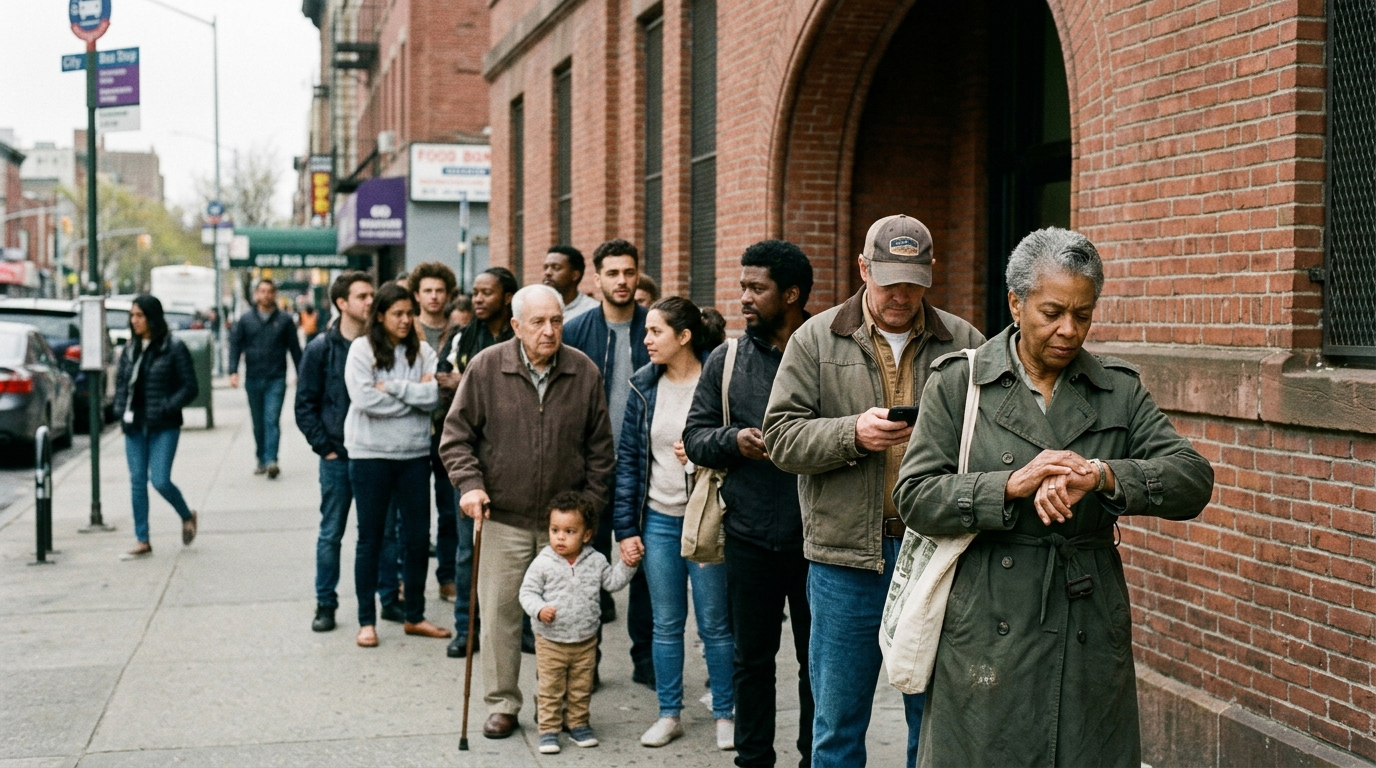
The act of waiting in line, often regarded as a trivial aspect of daily life, offers profound insights into societal values and power dynamics. As Dr. Karen Ho articulates, queuing systems reflect deeper hierarchies, revealing who is deemed 'worthy' of access and who is not. In a world increasingly driven by instant gratification, the way we approach the queue—a microcosm of social interaction—reveals our cultural narratives around patience and equity. The disparities observed in different societies prompt us to ask critical questions about the fairness of resource allocation and the implications of our unexamined acceptance of these systems. Thus, queues can serve as catalysts for dialogue about inclusion, access, and what we truly value as a society.
What do you think?
Cast your vote on this debate.
References
Continue the Debate
Related topics emerging from this analysis:
The Psychology of Waiting: How Anticipation Shapes Our Experience
An exploration of how the mental and emotional aspects of waiting affect behavior, decision-making, and overall satisfaction, and how these factors vary across cultures.
Digital Queues: Technology's Impact on Traditional Waiting
An investigation into how modern technology, like virtual queues and apps, is transforming the queuing experience and what this means for social interaction and community.
Queuing and Inequality: Analyzing Global Perspectives
A comparative study of how different countries handle queues, reflecting their cultural values and underlying issues of equality, accessibility, and social justice.
The Future of Queuing: Rethinking Public Spaces Post-Pandemic
A forward-looking discussion on how the COVID-19 pandemic has reshaped our approach to public space, queuing systems, and what this signifies about future societal structures.