
The Invisible Borders of Class: Why Do We Talk About Everything Except the Thing That Still Determines Almost Everything?
Economic inequality is a frequent topic in headlines, yet conversations about class itself often remain surprisingly muted. While public debates regularly center on race, gender, and identity, class is often treated as an uncomfortable or secondary issue despite its profound influence on education, housing, health, and opportunity. Sociologists and policy experts argue that this silence makes it harder to address the structural barriers that shape millions of lives. Others point to cultural narratives that celebrate individual success while minimizing systemic disadvantage. As wealth inequality reaches levels not seen in decades, the debate asks why class remains one of society's most influential—and least openly discussed—forms of inequality.
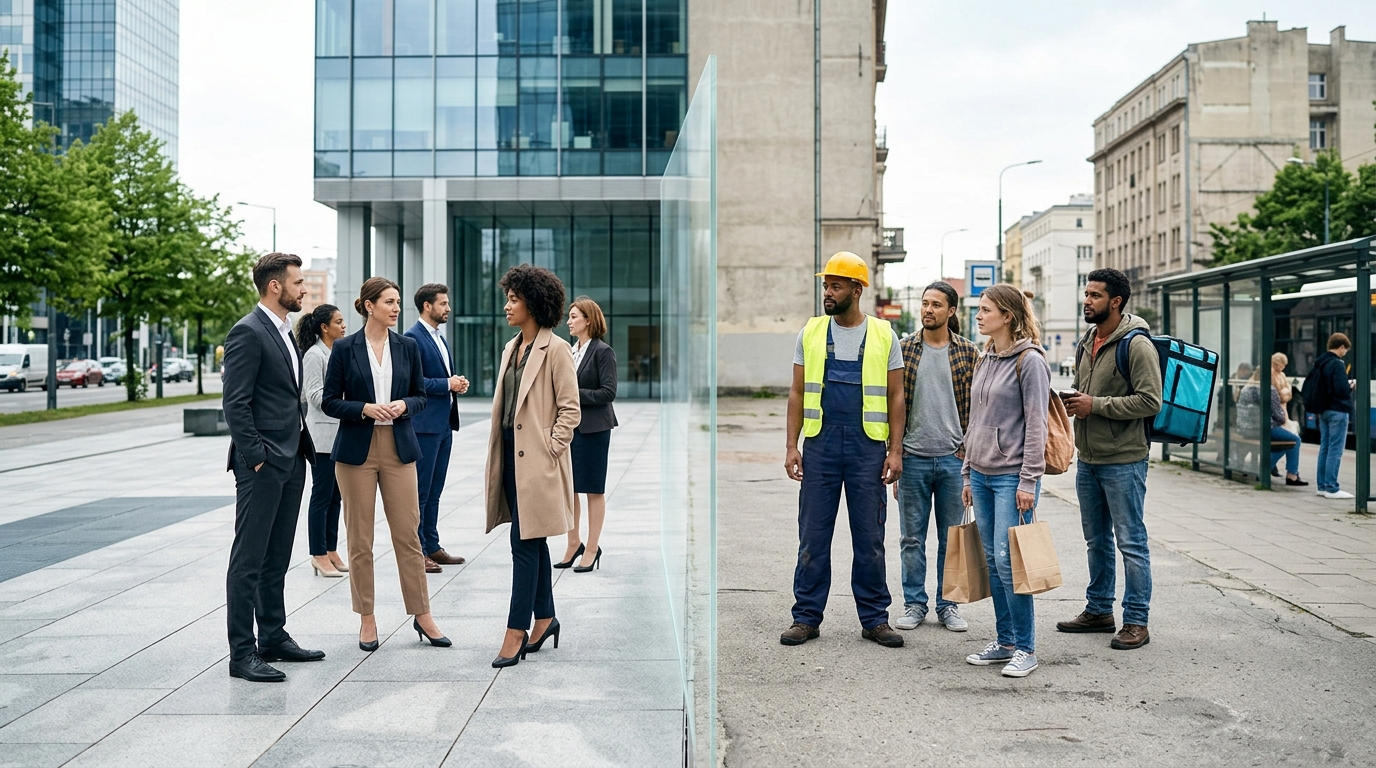
Key Metrics
74%
of Americans believe class inequality is a serious problem
62%
of low-income individuals report feeling stigmatized
50%
of boys in low-income families will be in similar financial situations as their parents
Few forces shape a person's life more profoundly than class.
It influences where people live.
The schools their children attend.
The careers they can pursue.
The healthcare they receive.
Even the opportunities they believe are possible.
Yet despite its enormous impact, class often occupies a surprisingly small place in public debate.
Discussions about race, gender, climate, and technology dominate headlines and political discourse, while class frequently appears only as a supporting theme rather than the central issue.
The question is increasingly difficult to ignore:
Why is one of society's most powerful determinants of opportunity also one of its least discussed?
As economic inequality widens and social mobility slows, many scholars argue that understanding class is no longer optional—it is essential.
Why This Matters Now
The pandemic exposed deep economic divides that had existed long before the public health crisis.
Many lower-wage workers faced job losses, health risks, and financial insecurity, while wealthier households often recovered more quickly as financial markets and asset values rebounded.
Housing affordability, education costs, healthcare access, and wage inequality continue to shape everyday life for millions of families.
Yet public conversations frequently frame these challenges through individual circumstances rather than structural conditions.
Understanding class means examining not only income, but also opportunity, power, and the systems that distribute both unevenly.
Expert Perspectives
Matthew Desmond: Class Is a Structural Reality
Princeton sociologist Matthew Desmond argues that class has become less visible partly because it is often discussed only through the lens of other social issues.
"Class issues are intertwined with issues of race, but they also exist on their own."
According to Desmond, class is embedded within the institutions that organize everyday life.
Its effects can be seen in:
- Housing access
- Educational opportunity
- Labor markets
- Wealth accumulation
- Neighborhood inequality
He also believes that American culture's emphasis on individual achievement can obscure the structural forces shaping economic outcomes.
"When we deny class as a major factor, we risk ignoring the very real challenges that affect millions."
Understanding inequality requires looking beyond individual choices to the systems that shape those choices.
Ann Helen Petersen: The Story We Tell About Class
Cultural critic Ann Helen Petersen argues that class is often misunderstood because it is framed as a matter of personal success or failure rather than structural inequality.
"Rather than discussing class as a structural issue, we often frame it as an individual failing."
Media narratives frequently celebrate stories of perseverance while overlooking the broader conditions that make economic mobility easier for some than for others.
Petersen believes this emphasis encourages stereotypes instead of meaningful analysis.
She argues that class is not simply an economic category.
Advertisements
It is also a shared social experience that influences identity, expectations, and belonging.
Changing policy may require first changing the stories society tells about economic success and hardship.
Robert Putnam: Class Shapes Generations
Harvard public policy scholar Robert Putnam approaches the issue through the lens of social mobility.
He argues that class increasingly determines the opportunities available to children long before they enter adulthood.
"The opportunity gap is not just an economic issue but also a social one that shapes the future of our children."
Putnam emphasizes that inequality extends beyond income.
Access to mentorship, professional networks, stable communities, and educational support all influence long-term outcomes.
These advantages—or disadvantages—often accumulate across generations.
"If we don't acknowledge class in its full scope, we are failing the next generation."
Economic mobility depends as much on social capital as financial capital.
Editorial Synthesis
Where Experts Agree
Although they approach the issue from different disciplines, the experts share several important conclusions:
- Class deserves a more prominent place in public debate.
- Economic inequality is shaped by structural forces, not simply individual decisions.
- Class intersects with race, gender, education, and opportunity.
- Ignoring class makes effective policy solutions more difficult to achieve.
Where Experts Disagree
Structure or Culture?
Desmond emphasizes institutional systems that reinforce inequality.
Petersen places greater emphasis on the cultural narratives that influence how society understands class.
Present Conditions vs. Future Mobility
Putnam focuses primarily on how class affects children's opportunities across generations.
Desmond concentrates more directly on the structural realities shaping people's lives today.
What Should Change First?
Some experts emphasize policy reform.
Others argue that public understanding of class must evolve before lasting policy change becomes politically possible.
Why This Matters
The debate over class is ultimately about more than income.
It concerns opportunity.
Belonging.
Security.
And whether society accurately recognizes the forces that shape people's lives.
Ignoring class does not eliminate its influence.
Instead, it risks attributing structural challenges to individual shortcomings while overlooking the institutions that perpetuate inequality.
As economic divisions continue to widen, understanding class becomes increasingly important for addressing issues that range from education and housing to healthcare and workforce participation.
The experts differ on where reform should begin, but they agree on one fundamental point:
Class should no longer remain an afterthought in conversations about inequality.
A society cannot meaningfully address unequal opportunity while treating class as an uncomfortable subject. Bringing class into the center of public conversation is not about replacing other discussions of inequality—it is about completing the picture of how advantage and disadvantage are created, sustained, and passed from one generation to the next.

Editorial Take
Class: The Overlooked Determinant of Inequality
Essential AwarenessClass must be central to our conversations about inequality.
In a time where discussions on race, gender, and environmental issues dominate public discourse, class remains an uncomfortable truth we often sidestep. As highlighted by experts like Matthew Desmond and Ann Helen Petersen, the structural forces that uphold class disparities contribute significantly to social injustices. The narratives around individualism obscure the collective struggles of the lower class, perpetuating a cycle of invisibility. It is crucial to confront these class disparities head-on, elevating the conversation to the forefront of policy and dialogue. Recognizing class as a central issue is not just necessary for understanding societal dynamics; it is essential for fostering genuine change, especially as wealth inequality continues to rise. Moving forward, we must have the courage to amplify class discussions, making them integral to our broader conversations about equity and justice.
What do you think?
Cast your vote on this debate.
References
Continue the Debate
Related topics emerging from this analysis:
The Intersection of Class and Mental Health
Exploring how class disparities impact mental health outcomes and access to mental health care, with a focus on the stigma surrounding lower socioeconomic status.
Classism in the Education System: A Silent Epidemic
Investigating how class inequality shapes educational opportunities and outcomes, and why the conversation around educational reform often neglects class as a primary factor.
The Role of Media in Class Representation
Analyzing how mainstream media portrays class issues and whether it perpetuates stereotypes that further marginalize the working class.
The Globalization of Class Issues: A Comparative View
Examining how class disparities are experienced in different countries and cultures, and what lessons can be learned from global perspectives on class advocacy.