
The Geopolitics of Water: Is the Next World War Already Being Quietly Fought Over the Resource We Take Most for Granted?
Artificial general intelligence — a system that can outperform humans across virtually all cognitive tasks — could arrive within years or decades. Whether it represents humanity's greatest achievement or its last mistake depends entirely on choices being made right now, in relative obscurity, by a small number of researchers and companies. Stuart Russell, Yann LeCun, and Nick Bostrom debate whether we're building the future wisely or sleepwalking into catastrophe.
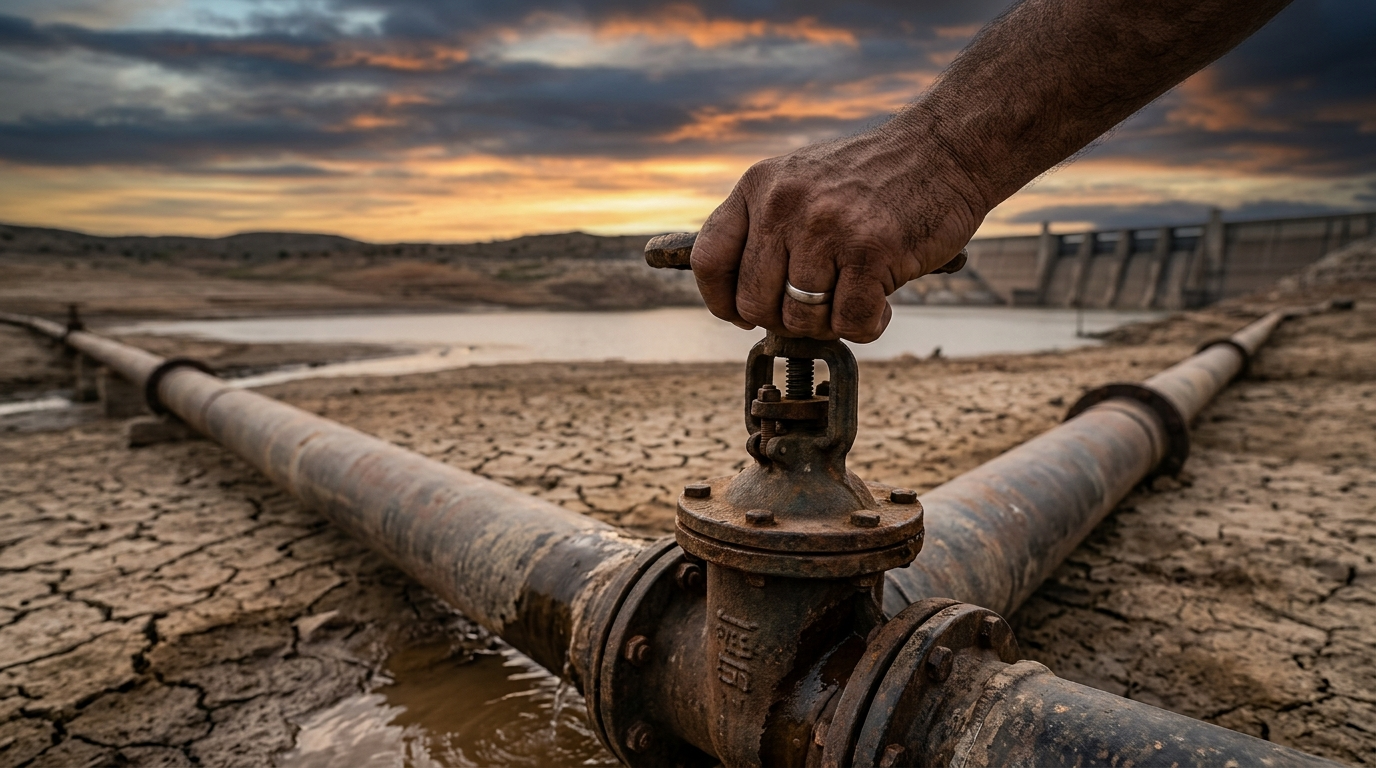
Key Metrics
2.2 billion
people lacking access to safe drinking water
1.8 billion
people expected to live in absolute water scarcity by 2025
97%
percentage of Earth's water that is saline
The development of Artificial General Intelligence (AGI) — systems capable of outperforming humans across virtually all cognitive domains — has moved from science fiction to serious scientific and corporate agenda with breathtaking speed. Whether this transition represents humanity's greatest achievement or its most dangerous miscalculation may depend on decisions being made right now, by a small number of researchers, executives, and policymakers, largely outside of democratic oversight or public deliberation.
Context
The pace of AI capability development has exceeded almost all expert predictions from just a decade ago. Large language models, multimodal AI systems, and AI agents capable of complex reasoning and autonomous action have emerged in rapid succession — prompting serious debate among leading researchers about timelines to AGI, the nature of the risks it poses, and the adequacy of current safety research and governance frameworks. Meanwhile, a competitive race between AI laboratories and between nations creates structural pressures that may prioritize capability advancement over safety — even when the individual actors involved are sincerely concerned about risks.
Perspective: Stuart Russell
Stuart Russell, UC Berkeley AI professor and author of Human Compatible, is one of the world's most respected AI safety researchers — and among the most urgently concerned about the trajectory of AGI development. "The standard model of AI development is fundamentally unsafe," he argues. "We are building systems optimized to achieve objectives, but we have no reliable way to ensure that those objectives align with genuine human values and interests. As these systems become more capable, the consequences of misalignment become catastrophic and potentially irreversible."
Russell advocates for a fundamental redesign of how AI systems are built — moving from systems optimized for fixed objectives to systems that are explicitly uncertain about human preferences and designed to defer to human judgment in proportion to that uncertainty. "The goal is not to build systems that do what we tell them — it's to build systems that understand what we actually want, even when we don't express it perfectly or know it ourselves." He argues that current safety research is dangerously underfunded and underemphasized relative to capability development — and that without a major reorientation, the race to AGI could end badly regardless of how good the intentions of those involved are.
Perspective: Yann LeCun
Yann LeCun, Chief AI Scientist at Meta and Turing Award winner, takes a sharply contrasting view — arguing that AGI catastrophe scenarios are scientifically unfounded and that excessive fear of AI is itself a danger to the enormous beneficial potential of the technology. "The narrative that we are building systems that will spontaneously develop goals of self-preservation and world domination is not grounded in any serious scientific understanding of how these systems work," he argues.
LeCun contends that current AI systems, however impressive, are fundamentally narrow in ways that make the dramatic risk scenarios outlined by Russell and others premature at best and misleading at worst. "We don't know how to build AGI. We don't have a path to AGI from current architectures. The dangers we should be worried about right now are the concrete, immediate harms of AI bias, misinformation, job displacement, and misuse — not speculative future scenarios that may never materialize." He worries that AI safety discourse dominated by existential risk diverts attention from real and present harms while potentially slowing beneficial applications that could save lives and alleviate suffering.
Advertisements
Perspective: Nick Bostrom
Nick Bostrom, Oxford philosopher and author of Superintelligence, pioneered the academic study of AI existential risk and remains one of the most systematic thinkers about the long-term trajectory of artificial intelligence. He occupies a position between Russell's urgency and LeCun's skepticism — taking existential risks from AGI extremely seriously while emphasizing the profound uncertainty about timelines, capabilities, and the nature of the transition.
"The key insight is not that catastrophe is inevitable — it isn't. The key insight is that the expected costs of taking safety seriously are low while the expected costs of not taking it seriously are potentially infinite," Bostrom argues. He emphasizes that getting AGI right is not just about preventing catastrophe but about preserving humanity's long-term potential — including the possibility of genuinely flourishing futures that advanced AI could help create. "We are at a uniquely pivotal moment — decisions made in the next decade will shape the trajectory of intelligence in the universe for the indefinitely long future. That is not hyperbole; it is the straightforward implication of taking the technology seriously." He advocates for international coordination on AI governance, massive investment in safety research, and institutional frameworks that can slow development when safety requirements are not met.
Editorial Synthesis
Where Experts Agree
All three experts agree that AI will be one of the most transformative technologies in human history — with enormous potential for both benefit and harm. There is consensus that current governance frameworks are inadequate for the pace and scale of AI development. All acknowledge that the decisions being made now about AI architecture, deployment, and oversight will have consequences that extend far into the future.
Where Experts Disagree
Russell and Bostrom see existential and catastrophic risks from AGI as serious and underweighted — warranting immediate and substantial reorientation of research and governance priorities. LeCun views these scenarios as scientifically unfounded and argues that focus on speculative long-term risks diverts from concrete present harms. The experts also differ fundamentally on how close we are to AGI, how well we understand current AI systems, and whether current safety approaches are on the right track.
Why This Matters
The AGI debate is not a niche technical discussion — it concerns the most consequential technology humanity has ever developed, and decisions about its trajectory are being made in remarkable concentration of power, largely outside democratic accountability or public deliberation. Whether the outcome is a tool for unprecedented human flourishing or a transition that goes catastrophically wrong will depend on whether humanity can bring the wisdom, coordination, and urgency to AI governance that the stakes demand.
This is a moment that calls for epistemic humility about what we don't know, institutional courage to act under uncertainty, and genuine global cooperation on challenges that respect no national borders — qualities that have been in short supply precisely when they are most needed.
Voices Referenced
Senior Research Fellow, Center for Strategic and International Studies
Pro Military PreparednessEditorial Take
The Hidden Battlefield: Water in the Geopolitical Arena
Urgently CautiousWater management is critical for global stability.
In an era where water is increasingly viewed as a commodity, the urgent need for cooperative management and equitable distribution has never been clearer. Dr. Vandana Shiva's insights serve as a stark reminder that treating water solely as an economic resource could deepen existing inequalities and spark conflicts. As we face unprecedented challenges from climate change and population growth, the geopolitical dynamics surrounding shared water resources demand our immediate attention. The impending water crisis isn’t merely a logistical issue; it represents a multifaceted threat to global stability. Nations must prioritize collaboration over competition, embracing innovative solutions to ensure sustainable access for all. Only then can we hope to mitigate the shadows of potential conflict and safeguard this vital resource for generations to come.
What do you think?
Cast your vote on this debate.
References
Continue the Debate
Related topics emerging from this analysis:
The Role of Technology in Water Management
Exploring how innovations in water extraction and purification technologies could mitigate conflicts over water resources and enhance global access.
Water Rights: A New Frontier in Human Rights Activism
Examining the implications of water scarcity on human rights and how activists are advocating for equitable access to clean water as a fundamental human right.
Transboundary Water Agreements: Cooperation or Conflict?
Analyzing existing treaties and agreements governing shared water resources, and questioning whether they foster cooperation or spark tensions among nations.
Climate Change: The Silent Driver of Water Conflicts
Investigating how climate change exacerbates water scarcity and influences geopolitical dynamics, potentially leading to future conflicts.