
The Archaeology of the Self: Are the Stories We Tell About Our Childhoods True — or Are We Writing Fiction About the Past to Justify the Present?
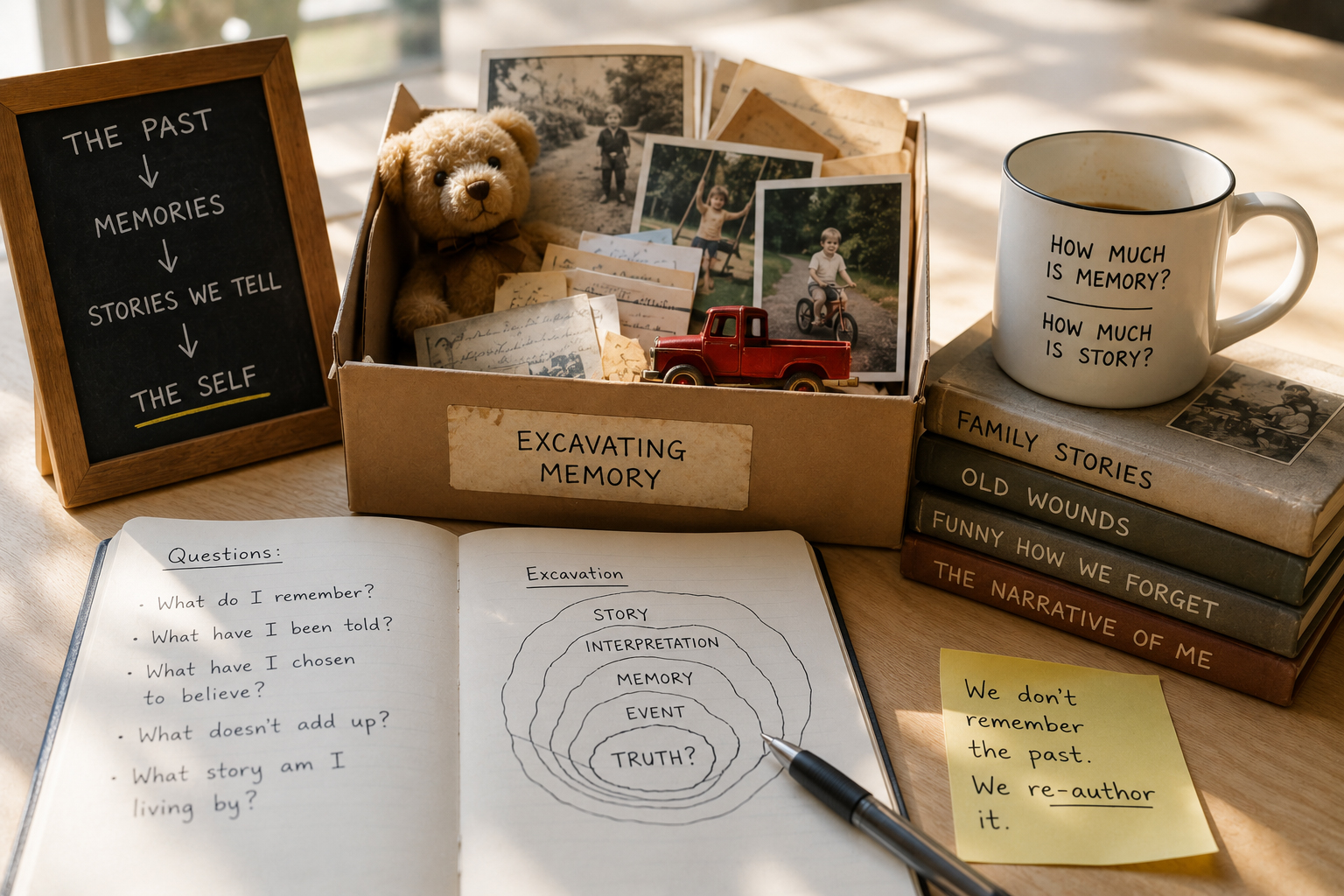
We treat our childhood memories as the raw material of who we are — but cognitive science keeps finding that memory is reconstructive, not recorded. Dr. Elizabeth Loftus, Dr. Dan McAdams, and Dr. Julia Shaw debate whether the stories we tell about our pasts are genuinely true, strategically revised, or necessary fictions we need to keep moving forward.
Key Metrics
30%
Percentage of adults who report having vivid false memories.
70%
Percentage of psychologists who believe childhood memories are influenced by subsequent experiences.
85%
Percentage of individuals who have revised their personal narratives over time.
How reliable are the narratives we construct about our childhood? Are these memories a genuine reflection of past experiences, or do they serve as a convenient fiction that helps us make sense of our present lives?
Context: Why This Matters Now
In an age focused on mental well-being and self-discovery, the stories individuals tell about their childhoods have assumed a critical role in shaping personal and collective identities. Individuals often engage in a process of 'self-archaeology' — digging into their pasts to unearth memories that validate their current beliefs and experiences. This raises pertinent questions about the authenticity of these memories.
Perspective: Cognitive Psychology and Memory Fallibility
Dr. Elizabeth Loftus, a leading cognitive psychologist renowned for her research on the malleability of memory, highlights the complex nature of remembering childhood experiences. "Memories are not static; they are reconstructive. Each time we recall a memory, we risk altering it. Individuals may unknowingly incorporate external information, social expectations, or personal feelings into their memories, leading to distortions or even fabrications."
"The act of remembering is more akin to storytelling than to accurate recording. What we label as memory can often show traces of our later life experiences, embedding what we have learned or felt into past narratives."
Perspective: Narrative Psychology and Identity Development
Dr. Dan P. McAdams, a psychologist renowned for his work on narrative identity, offers a more nuanced view. He posits that the stories we tell about our childhoods, even if not entirely accurate, play a vital role in shaping our identities. "Narrative identity is a central component of how individuals understand themselves. The reinterpretation of childhood experiences is not merely a distortion but often a necessary aspect of personal growth."
McAdams suggests that as individuals navigate life's challenges, they seek coherence in their narratives. "This desire for coherent storytelling can lead people to embellish certain aspects of their past, but this does not inherently render those narratives false. Instead, they reflect the individual's current understanding of their life journey."
Advertisements
Perspective: The Psychology of Memory and Crime
Dr. Julia Shaw, a criminal psychologist and author, emphasizes the implications of memory trustworthiness in legal contexts. "False memories can have real-world consequences, particularly in criminal cases. When individuals confidently recount memories that are actually the product of suggestion or misinformation, it complicates the search for justice."
Shaw argues that while memory is susceptible to distortion, the emotional weight of these recollections should not be dismissed. "Even if a memory is not accurate, the emotions associated with it can be very real. This calls into question how we define truth: should we focus on factual accuracy, or should we also consider emotional truth?"
Editorial Synthesis
Where Experts Agree
Memory is reconstructive and can be influenced by various external factors. The stories we tell about our childhoods are crucial for identity formation. Emotions tied to memories, regardless of their factual accuracy, are significant and can impact an individual's life choices.
Where Experts Disagree
The extent to which memory distortions influence personal identity — whether this is primarily negative or a necessary part of growth — is debated. Experts also differ on the implications of memory inaccuracies on legal and mental health narratives, and on how to approach 'truth' in personal narratives: factual accuracy versus emotional validity.
Why This Matters
Recognizing the malleability of memory can foster greater self-awareness and compassion toward oneself. In the broader societal context, the discourse about memory accuracy has vital implications for mental health practices, judicial processes, and collective memory.
The quest for truth in our personal histories may often lead to the understanding that the intricacies of memory are more about interpretation than recollection — and that the stories we tell ourselves are as much about who we are now as they are about who we were then.

Editorial Take
The Fluid Nature of Memory: A Call for Reflection
Thoughtfully CautiousWe acknowledge the complex interplay of memory and identity while advocating for a mindful examination of our past.
The exploration of childhood narratives compels us to confront the intricate relationship between memory and identity. As Dr. Elizabeth Loftus emphasizes, the reconstructive nature of memories raises important questions about their reliability. While our recollections may provide meaning or justification for our current selves, it's vital to recognize the potential for distortion. Engaging in self-archaeology is valuable, yet we must approach our past with a critical lens, understanding that the stories we tell may not be as fixed as we believe. Ultimately, the authenticity of these narratives offers an opportunity for growth, self-discovery, and understanding, even if that means facing uncomfortable truths about our constructed identities.
What do you think?
Cast your vote on this debate.
References
Continue the Debate
Related topics emerging from this analysis:
The Impact of Social Media on Memory Construction
Exploring how platforms like Instagram and Facebook influence the narratives we create about our childhoods, including how curated images and posts shape our recollections.
Memory and Mental Health: The Role of Trauma
Examining the relationship between traumatic childhood memories and mental health outcomes, addressing how selective memory can influence therapy and healing processes.
The Evolution of Family Narratives Through Generations
Investigating how family stories are passed down and altered over generations, and how these evolving narratives impact individual identity and familial relationships.
Cultural Influences on Childhood Recollections
Analyzing how cultural backgrounds shape the way individuals remember their childhoods, exploring differences in memory narratives between diverse cultural contexts.