
The Currency of Attention Spans: Are We Training Children to Think in Fifteen-Second Bursts?
The average attention span reportedly dropped from 12 seconds in 2000 to 8.25 seconds by 2015 — shorter, allegedly, than a goldfish's. Dr. Linda Stone, Dr. Nicholas Carr, and Dr. Howard Gardner debate whether TikTok-era kids are losing the capacity for deep thought, or simply developing a different kind of cognitive skill entirely.
Key Metrics
8.25
Average human attention span in seconds (2015)
12%
Decrease in attention span from 2000 to 2015
73%
Percentage of educators concerned about digital distractions
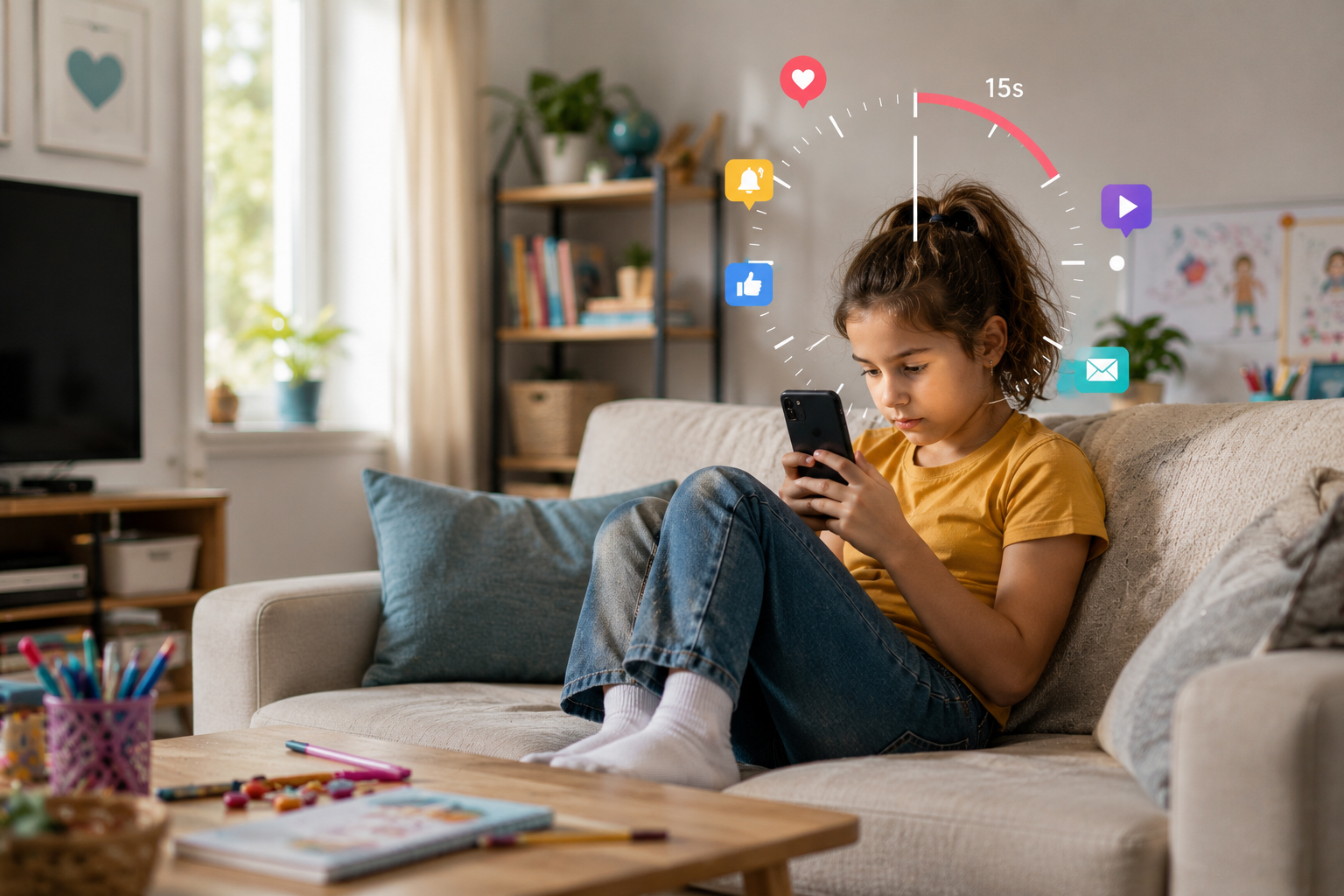
As the digital landscape evolves, a pressing question emerges: Are children today acclimating their cognitive architectures to process information in increasingly shorter bursts of attention? With the rise of social media, smartphones, and constant notifications, this moment in history demands critical analysis.
Context
In an age where information is just a swipe away, children are subjected to a barrage of stimuli and content that often lasts no longer than fifteen seconds. The recent surge in platforms like TikTok amplifies this concern. As early as 2016, a study found that the average human attention span had reduced from 12 seconds in 2000 to just 8.25 seconds in 2015 — supposedly shorter than that of a goldfish.
Perspective: Dr. Linda Stone
Dr. Linda Stone, a former Microsoft researcher, posits that our rapidly diminishing attention spans can largely be attributed to what she refers to as "continuous partial attention." This state of mind does not allow for the deep engagement necessary for critical thinking and problem-solving. According to Stone, the brain is being trained to flit between tasks, leading to what she describes as cognitive instability.
"What is troubling is that as we engage in continuous partial attention, we inadvertently normalize shallow engagement with content. This shapes not just our attention spans but also our cognitive abilities," she states. Stone underscores that this fragmentation of attention restricts opportunities for sustained inquiry — a crucial element for learning in academic settings.
Perspective: Dr. Nicholas Carr
In contrast, Dr. Nicholas Carr, an author and technology critic, elaborates on the historical context of attention spans concerning technology. He argues that each technological advancement has a transformative impact on cognitive processing, training children to expect immediate gratification and resulting in a preference for quick, bite-sized information.
"The way we consume information has profound implications for our capacity for deep, reflective thought. The shortness of attention spans isn't just a nuisance; it's a threat to the future of knowledge acquisition," Carr elaborates. He warns that if society continues on this trajectory, we may breed a generation incapable of comprehending nuanced arguments or engaging in prolonged discourse.
Perspective: Dr. Howard Gardner
Conversely, Dr. Howard Gardner, a Harvard professor of education, offers a more balanced view. He acknowledges the influence of digital culture on attention spans but stresses the need to adapt educational frameworks to leverage these developments. Gardner argues that shorter attention spans can be redirected toward more productive ends.
"It's not merely about how long children can focus, but rather how we can encourage their strengths in shorter formats of engagement. Creativity and innovation may well arise from these new modes of thinking," he says. Gardner advocates for integrating shorter tasks into learning curricula, suggesting that harnessing children's affinity for brief engagements can enhance learning outcomes if done judiciously.
Editorial Synthesis
Where Experts Agree
Modern technology is influencing attention spans, potentially diminishing the ability for deep learning. The need for educational systems to adapt to the changing landscape of information consumption is crucial. Immediate rewards from digital content can train students to favor short, straightforward information over nuanced content.
Where Experts Disagree
The extent of the impact technology has on cognitive development is debated, with some suggesting it can be harnessed for educational benefits. The categorization of attention spans as definitively decreasing is also contested — some argue they are simply evolving rather than deteriorating.
Why This Matters
The debate surrounding the impact of digital stimuli on children's attention spans highlights a critical inflection point in educational, social, and developmental paradigms. Misguided assumptions that shorter attention spans are inherently detrimental could obscure opportunities for innovation and engagement — yet the risks associated with a generation reliant on fleeting stimuli merit serious consideration.
As society continues to advance technologically, parents, educators, and policymakers must remain vigilant, striking a balance that preserves cognitive and emotional depth while also welcoming the creative possibilities of shorter content engagement — yielding not just adaptable learners, but thoughtful adults ready to engage with the complexities of a rapidly evolving world.


Editorial Take
Reassessing our Digital Habits: Finding Balance
Cautiously OptimisticWe believe proactive strategies can mitigate the risks posed by shortened attention spans.
In light of the evidence presented, it is clear that the way children are engaging with digital content is shifting their cognitive frameworks. The alarming decline in attention spans is not merely a trivial change; it presents serious implications for learning, creativity, and interpersonal relationships. As Dr. Stone emphasizes, the prevalence of continuous partial attention could normalize shallow engagement with critical content, potentially stunting intellectual development. However, this scenario is not without solutions. We must educate both children and caregivers about the value of focused engagement and the importance of balancing screen time with other forms of literacy and social interaction. By integrating structured downtime and promoting activities that require sustained attention, we can help cultivate healthier cognitive habits among younger generations. Thus, while the challenges are real, they are not insurmountable, and with deliberate effort, we can guide children toward a more balanced approach to consumption and interaction in this digital age.
What do you think?
Cast your vote on this debate.
References
Continue the Debate
Related topics emerging from this analysis:
The Goldfish Generation: Is This Myth Holding Us Back?
Exploring the validity of the claim that humans now have shorter attention spans than goldfish, and what this means for our understanding of cognitive development.
Social Media and Emotional Intelligence: Are Quick Takes Hurting Our Relationships?
Analyzing the impact of rapid content consumption on emotional intelligence and interpersonal relationships in children and adolescents.
Digital Literacy: Adapting Education to the 15-Second Mindset
Investigating how educational systems can evolve to teach critical thinking and deep engagement despite the rise of distraction-heavy technologies.
Meditation and Focus: Can Mindfulness Counteract Digital Distraction?
Examining the role of mindfulness practices and meditation in improving attention spans and cognitive stability in children raised in a digital environment.