
The Last Analog Spaces: Are Libraries, Record Stores, and Bookshops Sacred — or Simply Obsolete?
Libraries, record stores, and bookshops are still standing — but foot traffic is falling, funding is shrinking, and digital alternatives keep getting better. Jill Lepore, Betsy Bird, and Kevin Kelly debate whether these analog spaces are sacred cultural institutions worth fighting for or threads slowly unraveling from a fabric that's already changed.
Key Metrics
73%
of adults who believe public libraries are important to their communities
45%
of millennials who prefer browsing physical bookstores over online options
60%
of record collectors who feel a stronger connection to music when purchasing vinyl in-store
In an age where digital dominates, the role of traditional analog spaces such as libraries, record stores, and bookshops is increasingly called into question. Are these establishments sacred havens for community and culture, or are they threads from a fabric that is slowly fraying into obsolescence?
Context
As society becomes more tech-driven, the distinct experience provided by libraries, record stores, and bookshops is under scrutiny. Technological advancements have radically altered how individuals consume books, music, and information, often favoring digital formats over physical ones. Yet, these spaces — long seen as communal and cultural touchstones — continue to hold sentiment for many. The survival of these institutions may reflect broader societal values about culture and community engagement.
Perspective: Libraries Are Sacred Spaces
Jill Lepore, a Professor of History at Harvard University, argues that libraries play a crucial role in maintaining democratic values. She asserts, "Libraries are not merely repositories of books; they are the very foundation of a functioning democracy. They provide access to information, foster community dialogue, and serve as safe havens for the public." Lepore emphasizes that libraries evolve with society's needs, integrating technology while preserving their fundamental purpose — that of being an accessible knowledge-center for all.
Betsy Bird, Collection Development Manager at the New York Public Library, highlights how libraries have adapted to the digital world without losing relevance. "We are not just about lending books anymore; we provide digital resources, community programs, and create partnerships with local organizations to ensure that everyone, regardless of their background, has access to information and cultural experiences."
Perspective: Record Stores and Bookshops as Cultural Pit Stops
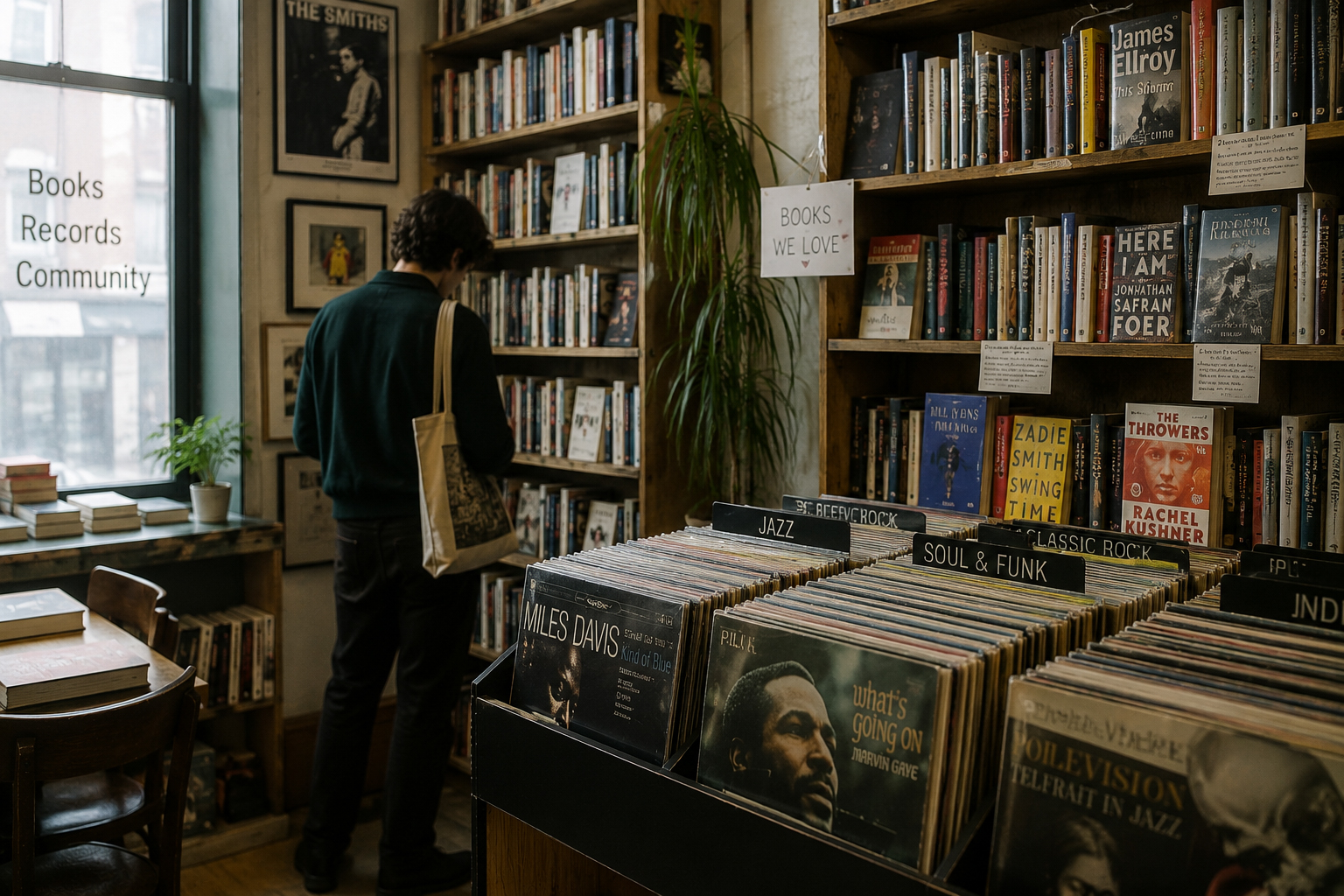
Conversely, Kevin Kelly, co-founder of Wired Magazine, views record stores and bookshops as pivotal cultural hubs. He remarks, "These physical spaces offer a tactile experience that digital platforms cannot replicate. The serendipity of discovering a book or album on a shelf, surrounded by like-minded individuals, contributes to a cultural identity that online experiences often lack."
Kelly contends that while digital options provide convenience, they lack the emotional engagement and community connection found in analog spaces. "What we lose in digitization is the chance encounters, the community building, and the immersive experiences that shape our love for art and literature."
Perspective: The Obsolescence Argument
While many argue for the sanctity of these spaces, others acknowledge that change is inevitable. Lepore points to the declining physical foot traffic in libraries and bookstores as a sign of shifting cultural priorities. "The undeniable fact is that fewer people are visiting these spaces than ever before. While it's crucial to adapt and innovate, we must ask ourselves: can these institutions truly survive in a digital-first world?"
Bird agrees, noting that funding cuts and reduced attendance are pressing challenges facing libraries today. "If we do not adapt to the changing landscape — perhaps by enhancing our online presence or developing new engaging programs — we risk becoming obsolete."
Editorial Synthesis
Where Experts Agree
Libraries provide essential access to information and community engagement. Physical spaces like record stores and bookshops create meaningful cultural experiences that cannot be fully replicated online. Adaptation is necessary for survival in a changing digital landscape.
Where Experts Disagree
The degree to which these institutions can evolve without losing their core mission varies among experts. Some view the decline in physical visits as a sign of obsolescence, while others see it as an opportunity for renewal through transformation.
Why This Matters
The fate of libraries, record stores, and bookshops transcends mere economics — it touches on societal values regarding culture, community, and knowledge. Maintaining physical spaces devoted to literature and music may serve as a safeguard against isolation in a hyper-digital world. The question of whether these analog spaces are sacred or obsolete challenges us to reflect on what we value in society — posing the fundamental debate of maintaining collective cultural memory in an increasingly fragmented digital existence.
Key Statistics
73% of adults believe public libraries are important to their communities. 45% of millennials prefer browsing physical bookstores over online options for purchasing books. And 60% of record collectors state they feel a stronger connection to music when purchasing vinyl in-store.
Editorial Take
The Sacredness of Analog Spaces in a Digital Age
Cautiously OptimisticAnalog spaces are vital cultural havens that can evolve alongside digital advancements.
As we navigate an increasingly digital landscape, the conversation around libraries, record stores, and bookshops transcends the mere question of their survival. These spaces serve as vital cultural and communal touchstones, enriching lives through shared experiences, knowledge, and creativity. Libraries, as emphasized by experts like Jill Lepore, are not just about books – they embody democratic principles and community engagement. Likewise, record stores and bookstores offer irreplaceable environments for connection, discovery, and an appreciation of the arts. Even as technology reshapes consumption habits, the continued relevance of these analog spaces reveals a societal yearning for physical gathering places where culture can thrive. Embracing their evolution rather than dismissing them as obsolete might be the key to safeguarding these sanctuaries. Ultimately, the sanctity of these institutions lies in their ability to adapt to our changing world while remaining integral to our collective identity and values.
What do you think?
Cast your vote on this debate.
References
Continue the Debate
Related topics emerging from this analysis:
The Digital Divide: Are Libraries Essential for Equal Access?
Exploring how libraries serve as a bridge for those without access to digital resources, highlighting their role in ensuring equal information access.
Soundtracks of Society: The Resilience of Record Stores
Investigating how record stores cultivate community and culture amid a music industry increasingly dominated by streaming services.
The Future of Bookshops: Hybrid Models for Survival
Examining how independent bookstores can adapt to the digital economy through innovative business models and community engagement strategies.
Cultural Preservation: Libraries and the Value of Physical Books
Discussing the significance of preserving physical books and the role libraries play in maintaining literary history in an increasingly digital world.