
The Museum Is Dying: Should Art Belong to Everyone, or Does Accessibility Kill Its Value?
Museums are struggling to survive, and digital access has opened art to millions — but does putting a Van Gogh on everyone's phone cheapen it? Thomas Campbell, Katherine Hargrove, and David Wilkins debate whether democratizing art saves it or slowly kills what makes it special.
Key Metrics
62%
of museum-goers support digital accessibility
48%
believe art's value decreases with accessibility
35%
of institutions have adopted virtual formats since 2020
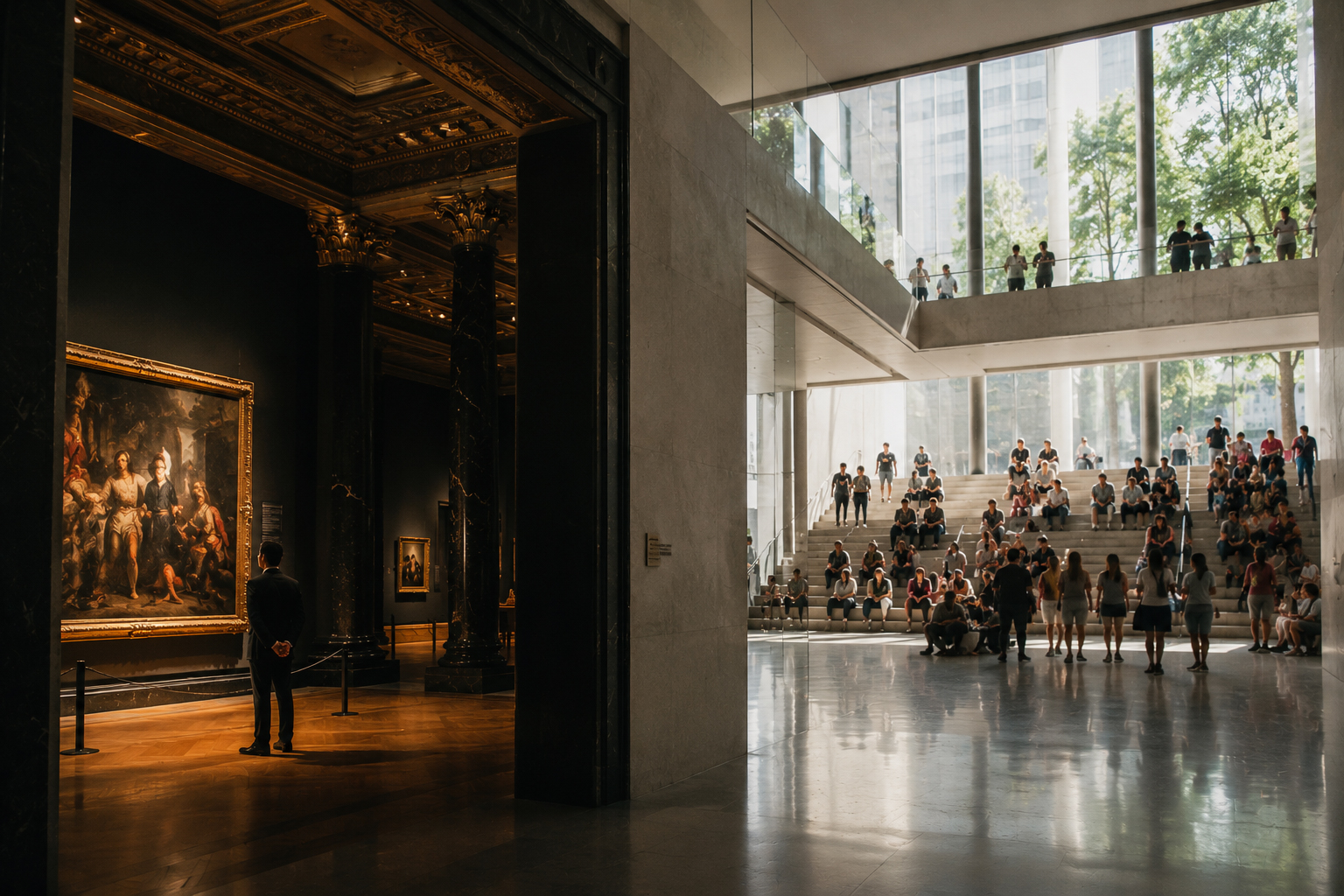
Art has long been regarded as a privileged domain, enjoyed by those who can afford to visit museums and galleries. Yet, the rise of digital platforms and a growing advocacy for inclusivity question this legacy. As museums grapple with how to adapt in a rapidly changing cultural landscape, a burning question emerges: Should art belong to everyone, or does increased accessibility dilute its inherent value?
Context
The relevance of this debate is magnified as museums struggle to stay afloat in a world altered by the COVID-19 pandemic and rapid technological advancements. With decreasing attendance and financial instability haunting many institutions, art accessibility has never been more critical, juxtaposed against concerns about the dilution of art's value and significance. In this landscape, voices from across the spectrum weigh in, providing perspectives that reveal the complexity of this issue.
Perspective: Art Should Be Accessible to All
Thomas Campbell, the former director of The Metropolitan Museum of Art, champions the idea that art must be made accessible to all layers of society. He argues that museums are not merely repositories of valuable objects but are cultural institutions that reflect the society they inhabit. Campbell asserts, "Art has the capacity to inspire, educate, and provoke dialogue. By limiting access, we stifle these opportunities, favoring exclusivity over inclusion."
He emphasizes that accessibility can foster a sense of belonging and community engagement, essential in a multicultural society. The adoption of innovative digital technologies, such as virtual tours and online exhibitions, has facilitated unprecedented access. Museums that previously required physical presence can now reach a decentralized audience, unearthing new opportunities to cultivate appreciation for the arts.
Katherine B. Hargrove, director of the Arts Access Program, echoes Campbell's sentiments. She emphasizes the role of empathy and connection in art appreciation, asserting that every individual should have the opportunity to engage with artistic expression. Hargrove posits, "Art has the power to reflect stories that might otherwise go unheard. It is our responsibility to democratize those stories and ensure they resonate with the broadest audience possible."
Perspective: Exclusivity Enhances Value
Conversely, David B. Wilkins, a professor at Harvard Law School, raises concerns about the potential consequences of overexposing art. He argues that while increased accessibility seems beneficial on the surface, it may inadvertently strip art of its mystique and exclusivity — qualities that enhance its value. Wilkins notes, "The perceived worth of art often correlates with its scarcity. When everyone has access, we may find ourselves in a situation where the unique value proposition of masterpieces diminishes."
Advertisements
Wilkins contends that the elite nature of certain artworks and institutions historically provided them with a unique status. By offering universal accessibility, the allure and standing of art could be threatened, leading to a homogenized cultural landscape devoid of distinct narratives. He warns against commodifying art, suggesting that the urgency to cater to mass audiences might overshadow the intricate value and deep history embedded within masterpieces.
Editorial Synthesis
Where Experts Agree
All experts acknowledge that art holds potential as a valuable educational and cultural tool. Museums face financial and engagement challenges in the modern age. There is also consensus that digital accessibility can enhance audience engagement.
Where Experts Disagree
Campbell and Hargrove see democratization as essential to the cultural fabric, while Wilkins highlights the risk of diluting art's intrinsic value through mass accessibility. The experts also diverge on the very definition of value: does it lie in exclusivity or in a broader, shared experience?
Why This Matters
The ongoing dialogue surrounding accessibility in the art world underscores a pivotal moment for museums and cultural institutions. As they navigate the delicate balance between inclusivity and exclusivity, stakeholders must consider the implications of their decisions not only for immediate audience engagement but for the long-term value of art itself.
This debate reflects broader societal tensions over access, ownership, and meaning, inviting an urgent reevaluation of how art is classified and valued in an increasingly interconnected world. The future may very well hinge on how effectively museums can adapt — ensuring that access and value aren't placed in opposition but instead allowed to coexist within a dynamic framework that honors both tradition and innovation.
Editorial Take
Balancing Accessibility and Value in the Arts
Embracing ChangeWe believe accessibility enhances, rather than diminishes, the value of art.
In an age where inclusivity is paramount, we must embrace the notion that art belongs to everyone while preserving its inherent value. The historical exclusivity of museums has marginalized countless voices and stifled cultural enrichment. As Thomas Campbell articulates, art's capacity to inspire and provoke dialogue is critical, and offering accessible platforms aids in cultivating a broader appreciation. Digital advancements present an invaluable opportunity to democratize art without reducing its significance. Therefore, rather than viewing accessibility as a threat to value, we should consider it an evolution towards a more inclusive cultural narrative. Museums must adapt strategies that merge physical presence with digital outreach, allowing for a dynamic interaction with art that honors both accessibility and its rich context.
What do you think?
Cast your vote on this debate.
References
Continue the Debate
Related topics emerging from this analysis:
The Role of Technology in Shaping Modern Art Appreciation
Exploring how digital platforms and virtual realities are transforming the way we experience and value art, and whether this shift enhances or diminishes authentic engagement.
Can Art Maintain Its Value in a Hyperaccessible World?
Analyzing the economic implications of making art widely accessible, including the potential impacts on artists' livelihoods, gallery sales, and the concept of exclusivity.
The Future of Museums: Hybrid Models for Engagement
Investigating how museums can blend physical and digital experiences to create new models of access while maintaining the integrity and value of the artworks they house.
Community vs. Curatorial Authority: Who Decides What Makes Art Valuable?
Debating the tension between community engagement and the traditional authority of curators in determining the value and significance of art, particularly in culturally diverse societies.