
The New Creative Class: AI as Democratization of Art or the End of the Professional Artist?
As generative tools flood the market, experts disagree on whether creativity is being liberated — or quietly replaced.
Key Metrics
62%
Artists who have used AI tools say it enhances their creativity.
45%
Percentage of professionals concerned about job displacement due to AI.
78%
Individuals who believe AI will redefine artistry.
Page Excerpt:
As generative tools flood the market, experts disagree on whether creativity is being liberated — or quietly replaced.
Opening Question
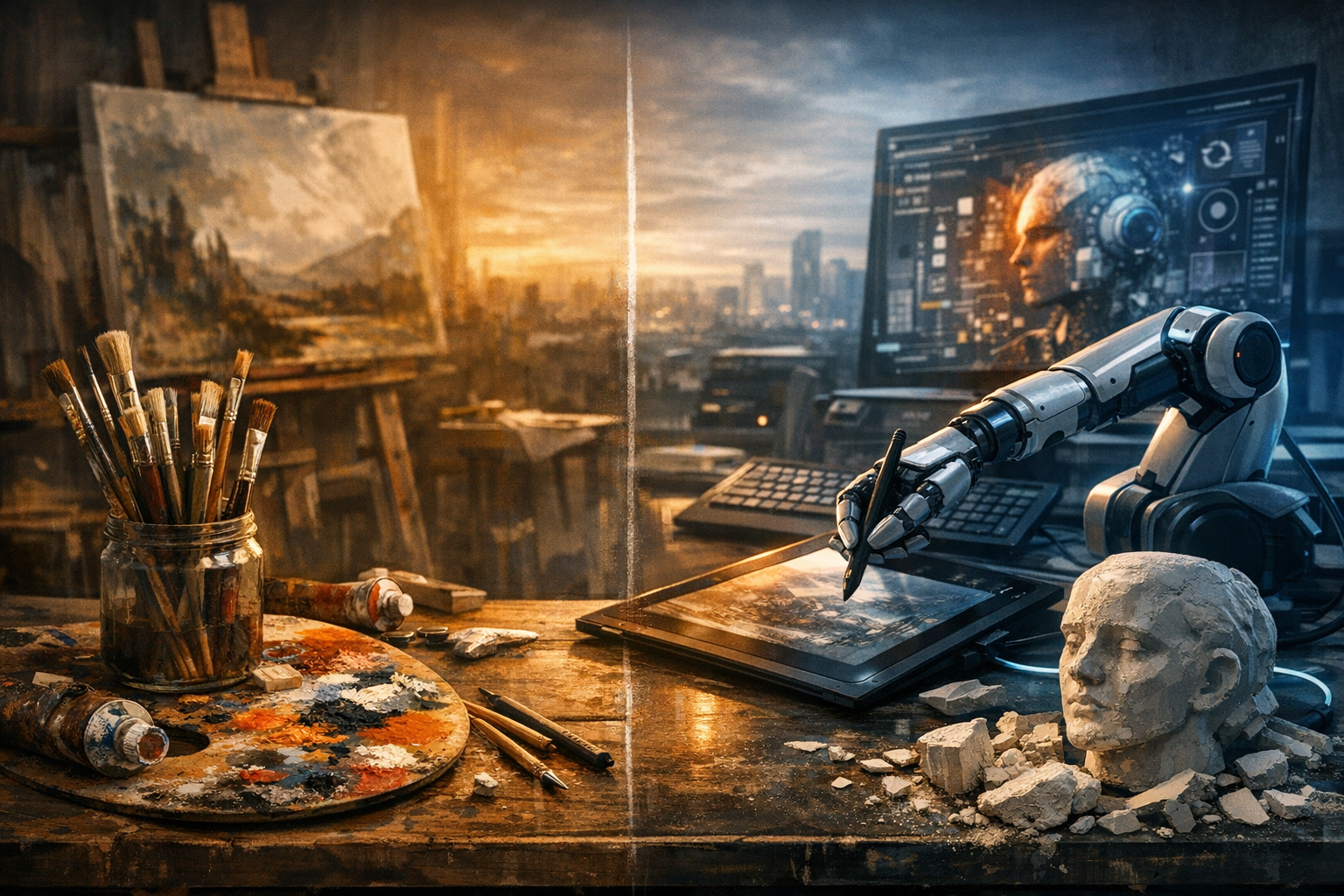
As artificial intelligence (AI) continues to advance, a pressing question emerges: Are we witnessing the democratization of creativity, or are we seeing the gradual erosion of the professional artist's role? This debate has intensified with the influx of generative tools capable of producing art, music, and writing with minimal human input.
Context
The rise of AI-generated content is not just a technological advancement; it signals a transformative shift in the creative landscape. With tools like DALL-E, ChatGPT, and various algorithmic music composers now accessible to the masses, the question of what it means to create art is front and center. For many artists and creators, these developments pose existential threats to their craft, while others view them as unprecedented opportunities for expansion and exploration in artistic expression. Understanding the viewpoints of experts in this field is crucial to navigating the evolving role of creativity in society.
Advertisements
Expert Perspectives
Perspective: AI as Democratization of Art
Proponents of AI as a tool for democratization argue that these technologies empower individuals who may lack traditional artistic skills. David Cope, a composer and AI researcher, emphasizes that AI can enhance human creativity by offering new avenues for expression. "AI tools can augment the creative process rather than replace it; they democratize access to artistic expression for everyone, leveling the playing field," he states.
Annie Easley, an AI researcher and advocate, echoes this sentiment, positing that AI provides tools that help budding artists experiment without the intimidation of conventional artistic norms. "With AI, anyone can create; it promotes diverse voices and ideas that otherwise might go unheard. It's crucial for the evolution of art," she argues. This perspective celebrates the idea that creativity can be an inclusive endeavor, accessible to individuals across demographics and skill sets.
Perspective: The End of the Professional Artist
In contrast, critics caution against the uncritical acceptance of AI in creative fields. Jaron Lanier, a computer scientist and author, worries that the pervasive use of AI tools may lead to the dilution of artistic quality and the obsolescence of professional artists. "When algorithms dictate artistic value, we risk losing the nuance and depth inherent in human creativity. The role of the artist is not just to produce; it's to interpret and evoke emotion," he states.
David Cope, while optimistic about AI's potential, also expresses caution regarding its implications for professional artists. He notes, "While AI can act as a collaborative partner, it doesn't negate the need for original thought and the uniquely human connection that art embodies. There is a fear that the market could become saturated with AI-generated content, leading to a devaluation of traditional art forms."
Editorial Synthesis
Where experts agree
- AI can expand the tools available for creative expression and accessibility.
- The democratization of artistic tools promotes inclusion and diversity in the arts.
- There is a place for collaboration between AI and human creativity.
Where experts disagree
- The value of AI-generated content versus human-created art.
- The long-term implications and effects on professional artists.
- Whether AI truly enhances creativity or risks diluting it.
Why This Matters
The emergence of generative AI tools in the creative sector presents a double-edged sword, shaping not only the future of art but also challenging our understanding of creativity itself. As experts weigh in, the crux of the issue lies in whether AI will serve as a liberating force for a broader creative landscape or herald the decline of traditional artistic roles. Each perspective carries weight, and as society navigates this transformative era, it must address the ethical, cultural, and economic implications of our evolving relationship with technology in creativity. Ultimately, the resolution of this debate will influence not just individual artists but also the very fabric of cultural expression as we move forward.


Editorial Take
Navigating the Creative Divide
Cautiously OptimisticAI can enhance creativity, but it must complement, not replace, human artistry.
The debate surrounding AI in the creative landscape presents two compelling narratives: the democratization of art and the potential replacement of the professional artist. While it is undeniable that AI tools expand access to creativity, enabling countless individuals to explore their artistic inclinations, we must also recognize the genuine concerns voiced by professional artists regarding their livelihood and the essence of creative expression. As generative tools proliferate, the industry needs to strike a balance that fosters innovation while safeguarding the unique human touch that defines true artistry. The future of creativity should not be a binary choice; instead, it should embrace both technological advancements and the irreplaceable value of human insight and emotion. Therefore, as we navigate this complex landscape, our focus should be on collaboration between human artists and AI, ensuring that both can coexist and enrich the cultural tapestry.
What do you think?
Cast your vote on this debate.
References
Continue the Debate
Related topics emerging from this analysis:
The Role of Human Emotion in AI-Created Art
Exploring whether generative AI can truly capture the emotional depth of human-created art, and debating whether emotional connection is more significant than technical skill in defining artistry.
Intellectual Property and AI Creations: Who Owns the Art?
Investigating the legal implications of ownership and copyrights concerning AI-generated content, and the challenges this presents to traditional artists and the evolving legal landscape.
AI and the Future of Collaborative Art: Human and Machine
Examining the potential for collaborative projects between human artists and AI systems, and how such partnerships could redefine the creative process.
Cultural Perceptions of AI-Generated Art: Acceptance vs. Rejection
Analyzing how different cultures perceive AI-generated works, and exploring the societal implications of acceptance or rejection of AI as a legitimate source of artistic expression.