
The Performance of Authenticity: Can You Still Be Genuine Once You Know You're Being Watched?
70% of people feel pressured to present an idealized version of themselves online — but does performing your identity mean you've lost it? Sherry Turkle, Dan Schawbel, and Erving Goffman debate whether you can still be genuine once you know you're being watched.
Key Metrics
70%
Feeling pressured to present an idealized version of themselves
73%
Prefer genuine self-presentation over performance
65%
Believe social media encourages performative behavior
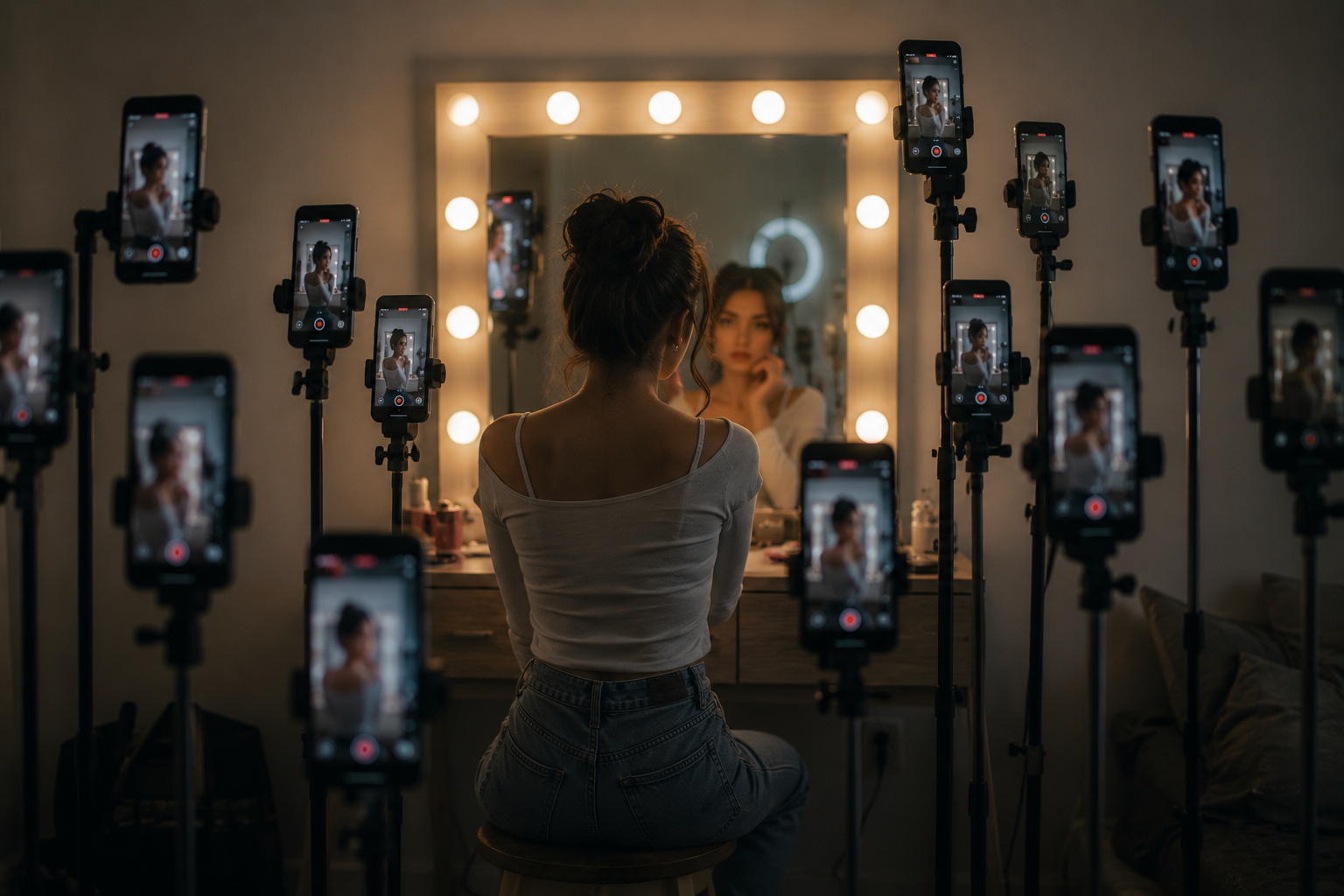
In an era where social media oversharing is the norm and surveillance is ubiquitous, the question of authenticity under scrutiny becomes increasingly pressing. Can individuals retain their genuine selves in environments where they are constantly aware of being observed? This question intersects with various fields, from sociology to psychology, as it challenges the very essence of identity in a hyper-connected world.
Context
This discussion is particularly relevant today, as the pervasive nature of social media encourages users to curate their online personas meticulously. According to a study by the Pew Research Center, 70% of people feel pressured to present an idealized version of themselves online. This pressure raises an important question: does self-awareness diminish our authenticity or enhance it through concerted performance?
Perspective: Sherry Turkle
Sherry Turkle, a professor at MIT, argues that the act of being watched alters individual behavior significantly. She suggests that the constant presence of cameras — literal and metaphorical — encourages people to perform rather than exist genuinely. In her book Alone Together, Turkle elaborates that technology has created a paradox: while it connects people, it also fosters a sense of disconnect, leading individuals to feel as though they must perform their identity in roles scripted by societal expectations.
Turkle highlights a duality in public and private selves, stating, "In an era of online personas, the question is no longer 'What is real?' but rather, 'What can I make real?'" Her perspective suggests that being aware of observation can lead individuals to adopt behaviors that are more performative and less authentic.
Perspective: Dan Schawbel
Dan Schawbel, managing partner at Workplace Intelligence, offers a complementary viewpoint. Schawbel indicates that performance need not negate authenticity. Instead, he argues that the awareness gained through observation can enhance one's sense of self. He stresses that professionals today often leverage public scrutiny as a source of accountability, thus fostering genuine professional development.
Schawbel posits, "In our workplaces, social media presence often influences how professionals engage, promoting a culture of transparency and growth." For him, authenticity is not about the absence of performance, but about the intention behind it — leading to more meaningful interactions as individuals strive to communicate their true selves amid external expectations.
Perspective: Erving Goffman
Sociologist Erving Goffman's foundational work on self-presentation sheds further light on this dynamic. Goffman argued in The Presentation of Self in Everyday Life that individuals constantly manage impressions to influence how others perceive them. From this perspective, awareness of being watched is intrinsic to social interaction itself.
Goffman noted, "The self is not a static entity but rather a performance shaped by the context of social interactions." He suggests that the performance of one's identity is a natural aspect of human behavior and that the awareness of observation can refine rather than hinder authenticity — while the core of identity remains intact.
Editorial Synthesis
Where Experts Agree
All three experts agree that self-awareness impacts how individuals behave, whether they perceive themselves as authentic or performative. The nature of identity and self-presentation is shaped by context, particularly in relation to social media and public scrutiny. They all acknowledge that identity involves a degree of performance influenced by societal expectations and norms.
Where Experts Disagree
Turkle argues that performance diminishes authenticity, while Schawbel sees performance as a vehicle for genuine self-expression. Goffman highlights that performance is a natural human behavior and not inherently negative. Turkle is also cautious about the effects of constant performance on mental well-being, whereas Schawbel focuses on the potential for growth and accountability as a positive outcome.
Why This Matters
Understanding the dynamics of authenticity in the age of observation is crucial, particularly as the line between the personal and the public continues to blur. The need for individuals to integrate their authentic selves into their public representations may motivate a more profound connection within communities both online and offline.
As social media platforms evolve, fostering an authentic dialogue about identity becomes imperative to combat feelings of performative inadequacy. Recognizing the nuances of identity while embracing the inherent performances that come with social interaction can lead to a more authentic human experience — both in our personal lives and in the workplace cultures we build together.


Editorial Take
Authenticity in a Performed Reality
Cautiously OptimisticWe believe authenticity can coexist with performance in today's interconnected landscape.
As we navigate the complexities of identity in a hyper-connected age, the debate surrounding authenticity takes on new dimensions. The insights from Turkle and Schawbel illustrate the tension between genuine self-expression and performative identity. While Turkle warns against the dangers of curated personas, Schawbel reminds us that performance can also foster connection and engagement. Ultimately, the challenge lies in finding a balance: can we present ourselves honestly while being aware of the gaze of others? The answer may lie in embracing the duality of our public and private selves—acknowledging that authenticity is not about erasing performance, but integrating it into a richer and more nuanced understanding of who we are. Therefore, while the pressure to conform to idealized versions of ourselves is real, it’s also possible to approach this performance as an opportunity for deeper authenticity, inviting a new way to engage with our identities in a digital world.
What do you think?
Cast your vote on this debate.
References
Continue the Debate
Related topics emerging from this analysis:
The Paradox of Vulnerability on Social Media
Exploring how the desire to appear vulnerable online can create a performative authenticity that challenges genuine self-expression.
The Role of Anonymity in Shaping Online Identity
Examining how anonymity affects individuals’ authenticity and the concept of self when not under surveillance.
Corporate Authenticity: Can Brands Be Genuine?
Investigating how companies navigate their identities in a world where consumers value authenticity and transparency.
The Psychological Impact of Social Media Surveillance
Analyzing the effects of being constantly observed on mental health, especially regarding anxiety and self-esteem.