
The Productivity Paradox: Why the Most Efficient Societies in History Feel Like the Most Exhausted?
We're producing more than ever — and burning out faster than ever. Daniel Susskind, Cal Newport, and Shoshana Zuboff investigate why the most efficient societies in history also feel like the most exhausted, and whether the relentless pursuit of productivity is quietly destroying the thing it's supposed to serve.
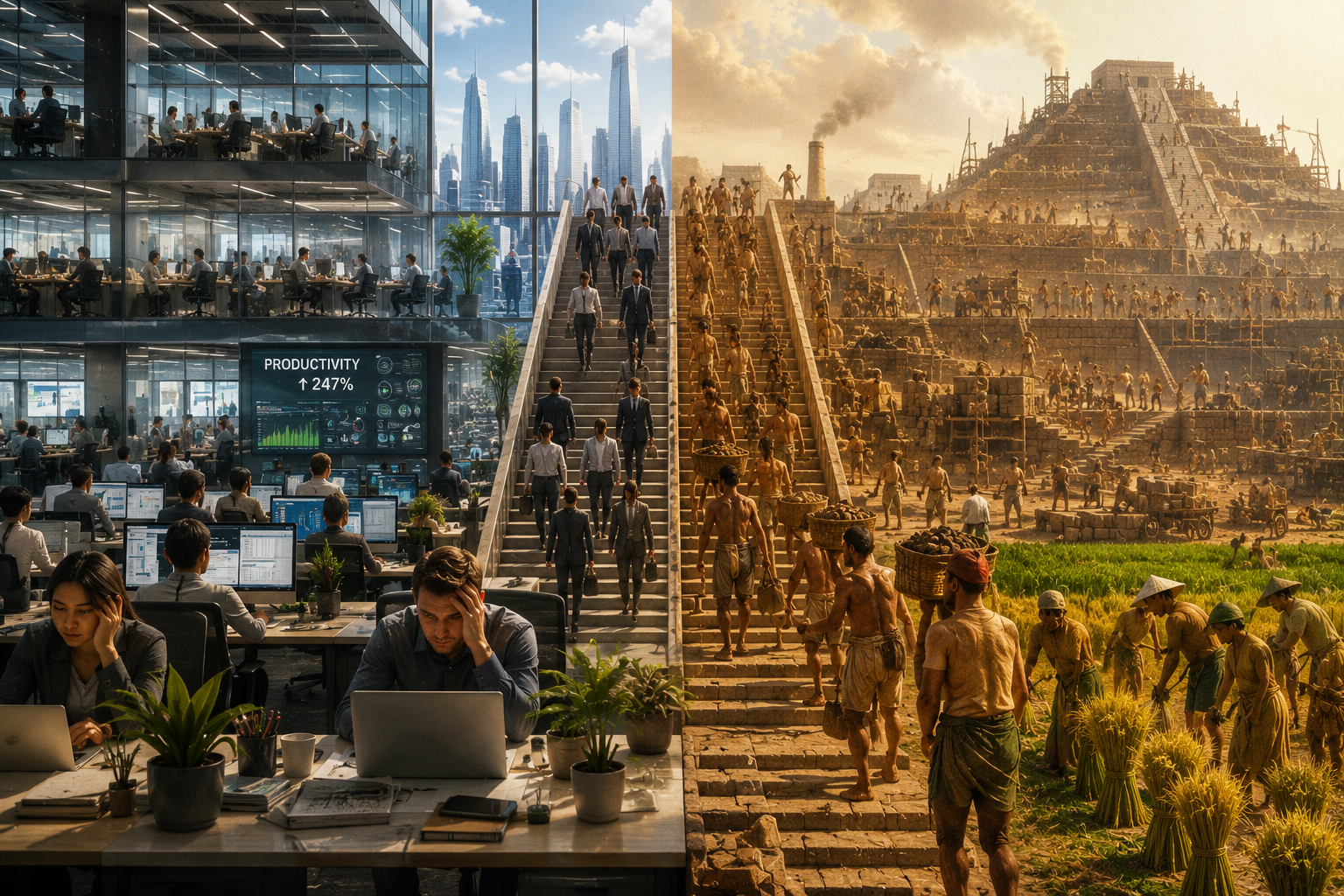
Key Metrics
68%
of workers report feelings of burnout
54%
believe productivity demands are unsustainable
31%
of employees feel engaged at work
Is it possible for a society to achieve unparalleled productivity while simultaneously grappling with a pervasive sense of exhaustion? This question serves as the crux of the productivity paradox — a phenomenon increasingly evident in advanced economies today. As societies engage in hyper-efficient practices and technological advancements, many individuals report heightened stress, diminished well-being, and chronic overwork.
Context: Why This Matters Now
As we navigate through the aftermath of a global pandemic and rapid technological advancements, the topic of productivity has never been more relevant. Workplaces have shifted to remote models, workplace norms have been upended, and the expectations for output have increased dramatically. Amid this whirlwind of change, there is a growing concern that the relentless focus on productivity is undermining mental health and overall life satisfaction.
Perspective: Daniel Susskind
Economist and author Daniel Susskind emphasizes that while technological advancements have the power to enhance productivity, they also lead to a paradoxical outcome. In his view, highly efficient systems often cultivate an environment where individuals feel immense pressure to perform. "The pressure to be productive can become a source of constant anxiety, as individuals grapple with the fear of being left behind in a rapidly changing job market," Susskind states.
Susskind argues that society's fixation on efficiency has led to the erosion of the human experience. The emphasis on speed and output has resulted in a prioritization of metrics over meaningful engagement. "In our quest for maximum productivity, we often overlook the importance of downtime," he emphasizes, suggesting that sufficient rest and recovery are essential components of sustainable productivity.
Perspective: Cal Newport
Author and computer science professor Cal Newport offers a complementary viewpoint by highlighting the role of technology in exacerbating the productivity paradox. Newport posits that the very tools designed to enhance efficiency can create distractions that disrupt focus and erode the quality of work. "People are bombarded with notifications and multitasking demands that diminish their ability to engage in deep work," he notes.
Newport advocates for a reevaluation of how success is defined in modern workplaces. He argues for a shift toward prioritizing depth over breadth, promoting strategies such as time-blocking and deep work sessions. "When workers are encouraged to immerse themselves fully in their tasks, they can achieve higher satisfaction and better outcomes," he argues. By contrast, a fragmented approach to work leads to burnout and exhaustion.
Advertisements
Perspective: Shoshana Zuboff
Shoshana Zuboff, an influential scholar and author, offers a critical lens on how surveillance capitalism intersects with productivity. Zuboff argues that the infrastructure of data collection in modern workplaces creates an environment where employees feel constantly monitored and evaluated. "This culture of surveillance breeds a sense of mistrust and anxiety," she warns, suggesting that when employees know their every move is tracked, they may push themselves harder to align with corporate metrics.
Zuboff points out that, in striving for productivity, organizations often sacrifice employees' autonomy and sense of agency. "People need to feel in control of their work and their time," she asserts. The lack of agency can lead to feelings of exhaustion as workers find themselves trapped in a cycle of constant performance measurement.
Editorial Synthesis
Where Experts Agree
All three experts recognize that technology plays a dual role in productivity — offering both opportunities for efficiency and sources of distraction or anxiety. Each expert identifies that the relentless pursuit of productivity fosters an environment of pressure, impacting mental health and overall well-being. There is also consensus on the necessity of establishing a healthier work-life balance, where adequate rest and downtime are valued alongside high productivity.
Where Experts Disagree
Susskind emphasizes the loss of human experience in pursuit of metrics, while Newport retains faith in metrics as long as they support focused, deep work. Newport suggests that workplace practices should prioritize depth to combat anxiety, while Zuboff emphasizes the impact of surveillance structures as a primary source of stress. Different strategies are also proposed — Newport advocates for structuring deep work, while Susskind suggests broader societal reforms that prioritize human experiences.
Why This Matters
The productivity paradox raises essential questions about the future of work and well-being in advanced societies. As productivity continues to soar, understanding the underlying tensions that contribute to employee exhaustion becomes critical. This dialogue speaks to the lived experiences of millions.
Efforts must be made to place greater value on mental health, job satisfaction, and employee autonomy. Fostering cultures that prioritize meaningful engagement and respect workers' boundaries could lead to a more sustainable approach to productivity — one that enriches rather than depletes. The challenge lies in redefining success in ways that honor both productivity and humanity — finding a path towards efficiency that doesn't come at such a significant personal cost.


Editorial Take
Rethinking Productivity for Human Flourishing
Cautiously OptimisticWe believe a balance between productivity and well-being is achievable.
The productivity paradox urges us to reevaluate our approach to efficiency in modern society. While advancements in technology and organizational practices promise higher output, they often come at the cost of our mental health and overall life satisfaction. Experts like Daniel Susskind argue that the relentless pressure to perform has transformed workplaces into sources of anxiety rather than realms of growth and creativity. As we navigate a post-pandemic world, organizations must prioritize well-being alongside efficiency. By fostering environments that value human experience and emotional health, we can create sustainable productivity that genuinely enhances quality of life, rather than compromising it. This shift is not just necessary; it is vital for cultivating resilient societies that thrive amid challenges rather than succumb to exhaustion.
What do you think?
Cast your vote on this debate.
References
Continue the Debate
Related topics emerging from this analysis:
Reimagining Remote Work: Balancing Productivity and Well-Being
Exploring how remote work models can be designed to enhance employee well-being without compromising productivity.
Technology vs. Human Experience: Finding the Right Balance
A discussion on how to leverage technological advancements while preserving essential human elements in workplaces and education.
The Cost of Efficiency: Economic Implications of the Productivity Paradox
Analyzing how relentless productivity pressures affect long-term economic sustainability, worker satisfaction, and community health.
Mental Health in a High-Performance Culture: Strategies for Resilience
Strategies for individuals and organizations to foster mental health in environments obsessed with performance and efficiency.