
The Return of Religion: Spiritual Hunger in a Secular Age — or Nostalgia Mistaken for Truth?
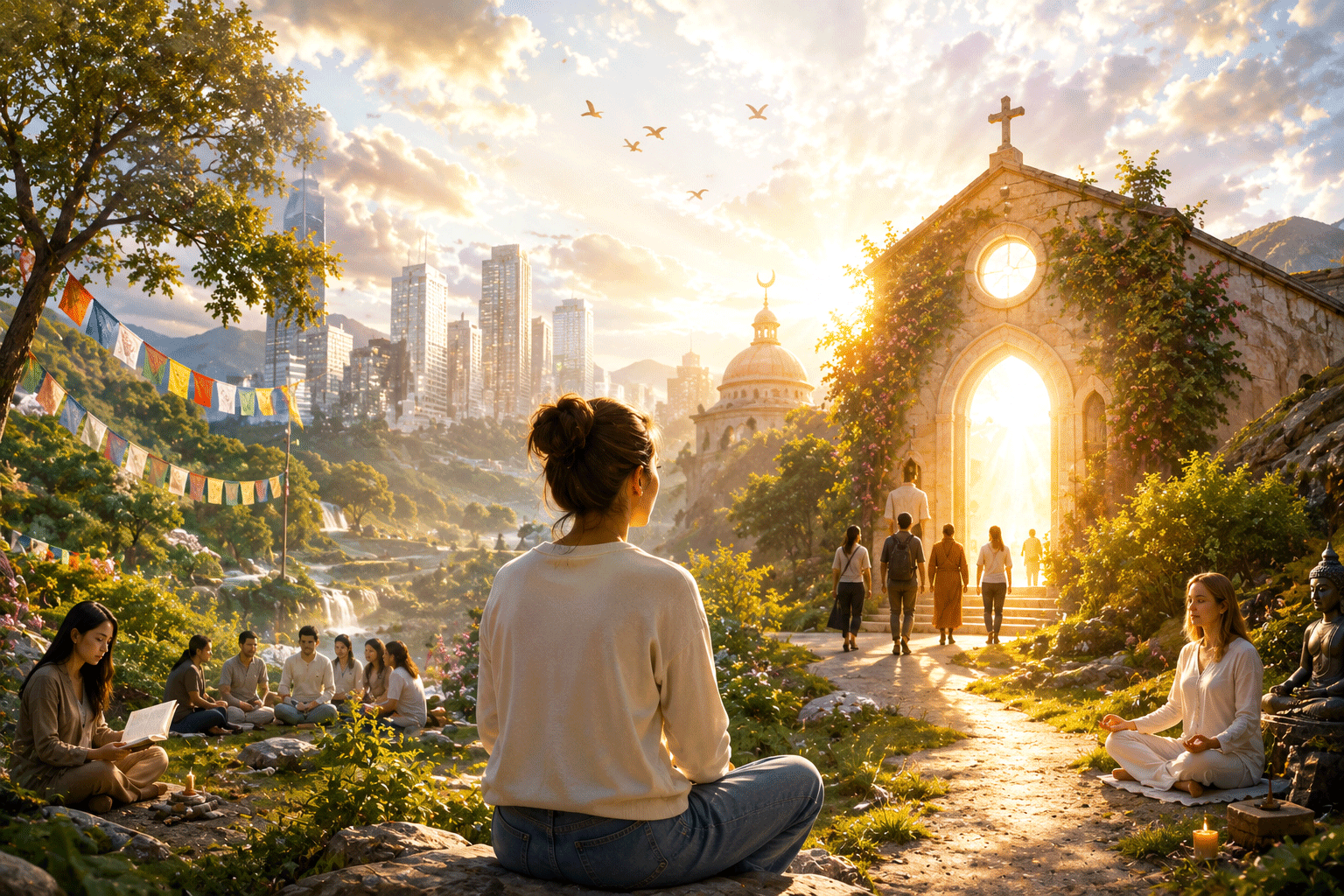
After decades of secular progress, religion is making a comeback — especially among younger generations searching for meaning, community, and certainty. Karen Armstrong, Christopher Hitchens, and Reza Aslan debate whether this spiritual resurgence is a genuine human need being answered or dangerous nostalgia dressed up as truth.
Key Metrics
56%
of individuals seek spiritual fulfillment outside traditional religious structures.
70%
of millennials identify as spiritual but not religious.
42%
of people believe religion is losing its influence in society.
In a world increasingly driven by technological advancements and secular ideologies, one wonders: Is the return of religion a genuine response to spiritual hunger, or merely nostalgia mistaken for truth? As societies grapple with existential crises and moral vacuums, the role of religion in contemporary life raises significant questions about belief, community, and meaning.
Context
The dawn of the twenty-first century has seen a striking resurgence of interest in religion, defying predictions of its obsolescence in a secular age. This phenomenon is particularly pronounced among younger generations, many of whom are exploring spiritual paths outside traditional confines. Amid political turmoil, economic uncertainty, and a global pandemic, people are seeking solace and purpose. Understanding this shift is critical for policymakers, educators, and community leaders, as it shapes the cultural landscape.
Expert Viewpoints
Perspective: Karen Armstrong — Religion as a Necessity
Karen Armstrong, an eminent author and religious historian, argues that the resurgence of religion reflects a deep-seated spiritual hunger that modern secularism often fails to address. Armstrong posits that, in an age of rapid change, people yearn for structures that provide meaning and community. She highlights that the rise of fundamentalism in various religious traditions is not a rejection of modernity but rather a response to the loss of traditional values and certainties.
Armstrong emphasizes the role of compassion at the heart of all religious traditions, suggesting that a reconnection with these core values can offer pathways to heal societal rifts. In her view, contemporary society can benefit tremendously from revisiting religious texts and practices — not as dogma but as sources of wisdom.
Perspective: Christopher Hitchens — A Caution Against Nostalgia
On the other hand, Christopher Hitchens, a political activist and author known for his critiques of religion, warns against romanticizing religious traditions. Hitchens asserts that while many claim to seek spiritual fulfillment, this often veils an instinct to return to dogma, which can stifle critical thinking and promote divisive ideologies.
Hitchens argues that nostalgia for religious beliefs overlooks the historical atrocities committed in the name of faith. He contends that true moral progress stems from a secular understanding of ethics, built on reason and empathy rather than ancient text. He insists that societies should focus on creating inclusive frameworks based on shared human experiences rather than resurrecting outdated doctrines.
Advertisements
Perspective: Reza Aslan — A Personal Connection to Faith
Religious scholar Reza Aslan offers a nuanced perspective, recognizing both the yearning for spirituality and the risks of blind faith. Aslan posits that the return of religion can be understood through the lens of personal connection. Many seekers are looking for community and meaning, often turning to spirituality as a balm for their loneliness.
Aslan reminds readers that spirituality can manifest in diverse ways. He advocates for a pluralistic approach to faith that embraces the richness of religious expression while remaining critical of authoritarian structures. He notes that the flexibility of modern spiritual practices allows individuals to explore and redefine their beliefs in meaningful ways.
Editorial Synthesis
Where Experts Agree
All three experts acknowledge a growing spiritual deficit in modern secular society, prompting many to seek fulfillment in religion. They concur that religion historically provides a sense of community that is often lacking in contemporary life. Each also emphasizes the necessity of critically engaging with religious traditions, aiming for growth rather than blind acceptance.
Where Experts Disagree
While Armstrong sees the resurgence as a necessary response to a crisis, Hitchens considers it dangerous nostalgia that can regress moral reasoning. Armstrong and Aslan advocate for deriving wisdom from faith, while Hitchens views dogma as inherently restrictive. Hitchens promotes a purely secular framework for ethics, in contrast to Aslan's endorsement of pluralistic spiritualism.
Why This Matters
Understanding the resurgence of religion in a secular age requires recognizing both the genuine spiritual needs and the potential pitfalls of returning to traditional ideologies. Engaging with the core values of compassion can be a bridge to healing societal divides. Yet the dangers of dogma should not be underestimated. Aslan's perspective offers a pathway for those seeking spirituality while remaining aware of the complexities involved.
Ultimately, exploring the return of religion invites a deeper examination of what it means to be human in an increasingly fragmented world. In navigating this landscape, society must balance respect for diverse spiritual practices with a commitment to reasoned dialogue and empathy. The question remains: can humanity harness the positive aspects of religious resurgence without succumbing to the shadows of nostalgia?


Editorial Take
Navigating the Spiritual Renaissance
Cautiously OptimisticWe're optimistic about a meaningful dialogue between secular thought and spiritual exploration.
The resurgence of interest in religion in our secular age reflects a complex interplay of genuine spiritual hunger and nostalgia. As Karen Armstrong suggests, people are seeking meaning and community in a world fraught with uncertainty. However, as Christopher Hitchens warns, we must remain vigilant against romanticizing past beliefs that may not hold up to scrutiny. This emerging spiritual landscape invites us to explore the wisdom of religious traditions while critically evaluating their relevance in contemporary society. Ultimately, fostering dialogue between secular and religious perspectives may pave the way for a more inclusive understanding of spirituality that addresses modern existential dilemmas without succumbing to uncritical nostalgia.
What do you think?
Cast your vote on this debate.
References
Continue the Debate
Related topics emerging from this analysis:
The Role of Digital Religion in Modern Spirituality
Exploring how the internet and social media are shaping new forms of religious expression and community, particularly among younger generations seeking spiritual connection.
Secular Spaces: Alternative Communities in a Post-Religious World
Investigating how secular movements and non-religious communities are emerging to fulfill the same social and emotional needs that traditional religions once provided.
The Intersection of Politics and Religion in Contemporary Society
Examining how the resurgence of religious sentiment is influencing political ideologies and policies, and the implications for democracy and pluralism.
Fundamentalism vs. Spirituality: A Modern Dilemma
A deep dive into the contrast between fundamentalist interpretations of religion and more liberal spiritual practices, discussing their impact on society and individual belief systems.