
The Rise of Parasocial Politics: Are We Choosing Leaders, or Just Falling for the Most Relatable Persona?
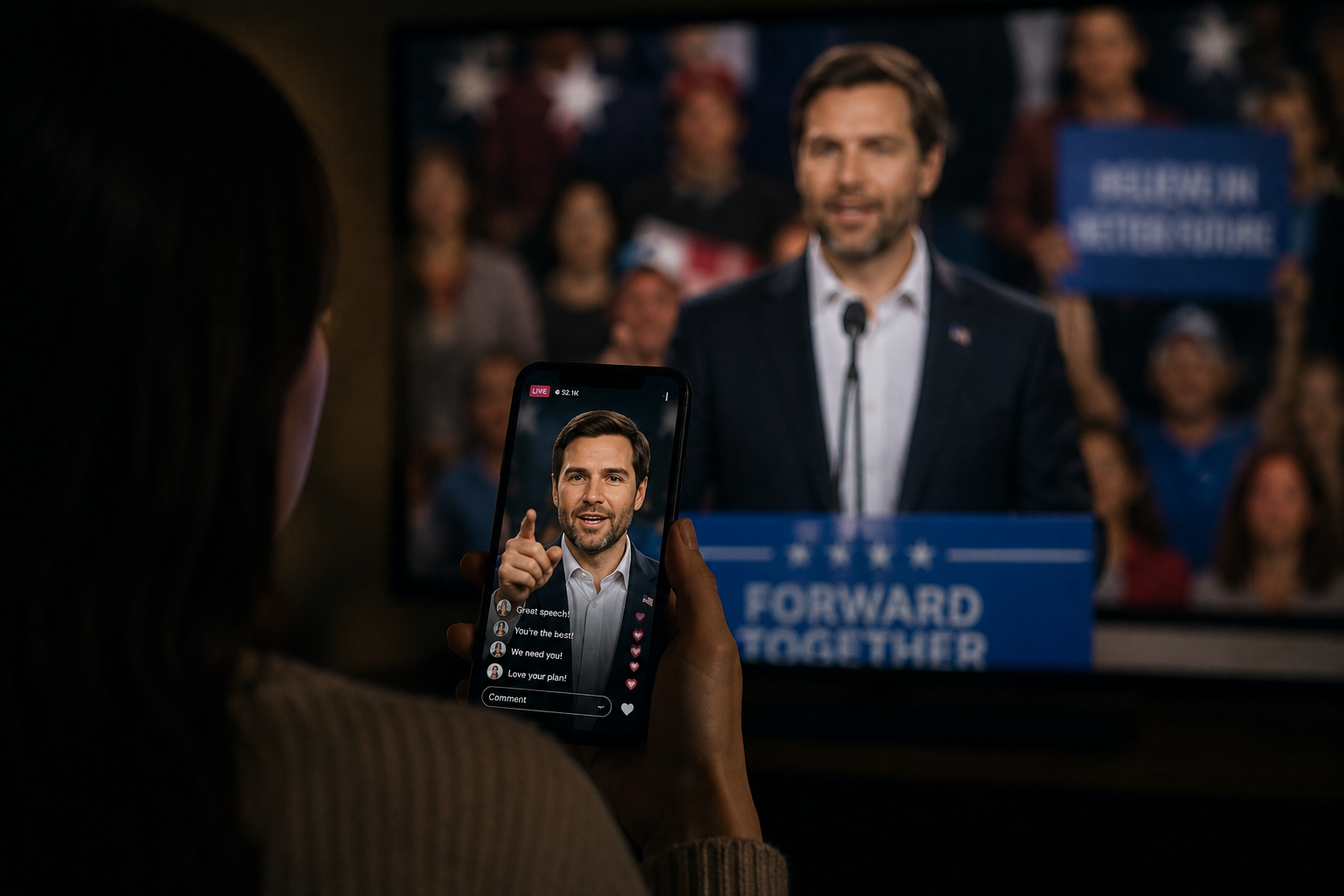
Politicians now post like influencers, share personal stories like content creators, and build the kind of one-sided intimacy usually reserved for celebrities and their fans. Dr. Jennifer Stromer-Galley, Dr. Matthew Hindman, and Dr. Kate Kenski debate whether voters are evaluating policy anymore, or just falling for the most relatable persona on their feed.
Key Metrics
62%
of voters prefer candidates with relatable personas.
78%
of social media users engage with political content regularly.
41%
of voters feel emotional connection influences their political choices.
Is modern political engagement being driven by genuine ideological alignment, or is it increasingly shaped by the allure of parasocial relationships? As social media deepens, the dynamics of leader-constituent interaction undergo a radical transformation. Are voters choosing leaders, or merely gravitating toward the most relatable persona?
Context: Why This Matters Now
In an era marked by digital communication, the traditional understanding of politics has shifted. Social media platforms allow individuals to engage with political figures like never before. Instead of merely consuming political content, voters can now feel a sense of connection, leading to the phenomenon known as parasocial relationships — one-sided relationships where individuals feel they know someone who doesn't know them in return.
This evolving landscape calls into question how voters make choices at the ballot box. Are they validating ideological beliefs, or are they swayed by the perceived authenticity, charisma, and relatability of candidates?
Perspective: Dr. Jennifer Stromer-Galley
Dr. Jennifer Stromer-Galley argues that today's political landscape is heavily influenced by how candidates present themselves online. According to her, "Candidates who craft a personal narrative tend to attract more followers, which can translate into greater political capital. This is particularly true in the context of social media, where authenticity is key. Voters crave relatability, often prioritizing personal connection over traditional political values."
She further notes that this phenomenon can lead to significant implications for governance. "When voters connect with a candidate primarily on a personal level, it can undermine the importance of policy debate and critical discussion, shifting the focus to personality over principles."
Perspective: Dr. Matthew Hindman
Conversely, Dr. Matthew Hindman provides a more skeptical viewpoint. He suggests that while relatability does play a role, it is not the sole determinant in political decision-making. "There's an inherent danger in overemphasizing the role of personality. Yes, charismatic leaders can attract followers, but we cannot forget the embedded value systems and structural factors that also drive political choices," he states.
Moreover, Dr. Hindman highlights that social media often amplifies certain narratives while suppressing others. "Platforms create echo chambers; in those spaces, leaders with extreme or polarizing personas can thrive. This doesn't necessarily mean that voters are swayed merely by relatability; they may also feel social pressure to conform to the ideas gaining traction in their digital milieu."
Perspective: Dr. Kate Kenski
Dr. Kate Kenski takes a more nuanced stance, proposing that both personality and policy have their place in shaping voter perception. "We exist in a hybrid space where emotional engagement with political figures and rational evaluation of their policies coexist," she asserts. Kenski introduces the concept of the emotional voter, pointing out that while underlying beliefs may anchor some constituents, the emotional appeal of candidates cannot be overlooked.
"We can observe this in recent elections, where candidates who project empathy or share personal stories often resonate with voters on an emotional level. It's essential to understand that this interplay facilitates informed decision-making, not partisan loyalty alone," she adds.
Editorial Synthesis
Where Experts Agree
Candidates' personal branding significantly impacts voter engagement and choice. Social media serves as a crucial tool in shaping public perceptions of political figures. Emotional connection plays a crucial role in modern political discourse.
Where Experts Disagree
The extent to which personality remains the overriding factor versus policy orientation is contested. Experts also differ on the nature of social media's influence — whether it fosters authentic connection or primarily drives polarization — and on the implications of these dynamics for longer-term political behavior and governance.
Why This Matters
The rise of parasocial politics is indicative of a broader shift in political engagement that warrants careful scrutiny. Understanding whether voters are aligning themselves with authentic representations of candidates or merely with compelling personas can direct future political strategies and narratives.
As Dr. Stromer-Galley warns, prioritizing relatable personalities may risk reducing complex issues to mere emotional appeals. Dr. Hindman and Dr. Kenski urge for a balanced examination of emotional engagement alongside concrete policy discussions. Ultimately, the future of democratic engagement depends on striking this balance — between the allure of relatability and the necessity for informed ideological discourse.
Voices Referenced


Professor of Media and Public Affairs, George Washington University
Against Emotional Appeal
Editorial Take
Navigating the New Landscape of Parasocial Politics
Cautiously OptimisticWe must embrace the personal connections in politics while prioritizing informed engagement.
As we delve deeper into the implications of parasocial politics, it's essential to recognize the dual-edged sword this phenomenon presents. While the personal connection fostered between voters and candidates can enhance political engagement and mobilization, it risks overshadowing substantive ideological discourse. Voters may find themselves attracted to the charisma and relatability of a candidate without a thorough understanding of their policies, ultimately distorting the democratic process. Moreover, as authenticity becomes a prime currency in this new terrain, we must critically assess how it shapes our political judgments. Maintaining a balance between connection and critical analysis will be crucial in preserving the integrity of our electoral choices. In this era of hyper-personalization, fostering informed voting becomes more vital than ever, ensuring that our political choices remain grounded in informed ideologies rather than mere emotional resonance.
What do you think?
Cast your vote on this debate.
References
Continue the Debate
Related topics emerging from this analysis:
The Dark Side of Charisma: How Relatability Can Mislead Voters
Exploring the risks of voters being drawn to charismatic leaders without fully understanding their policies, potentially leading to harmful governance.
From Followers to Fans: The Role of Social Media Influencers in Politics
Examining how social media influencers shape political opinions and the implications of transitioning public figures from traditional politicians to influencer-like personas.
Empathy vs. Ideology: The Future of Political Engagement
Debating whether future political engagement will be dictated by emotional connections rather than ideological beliefs, and how this affects civic responsibility.
The Accountability Paradox: Parasocial Politics and Voter Responsibility
Investigating how parasocial relationships with leaders may impact voter accountability and whether voters are less likely to hold leaders responsible for their actions.