
The Suburbanization of Loneliness: Did We Design Isolation Into the Architecture of Everyday Life?
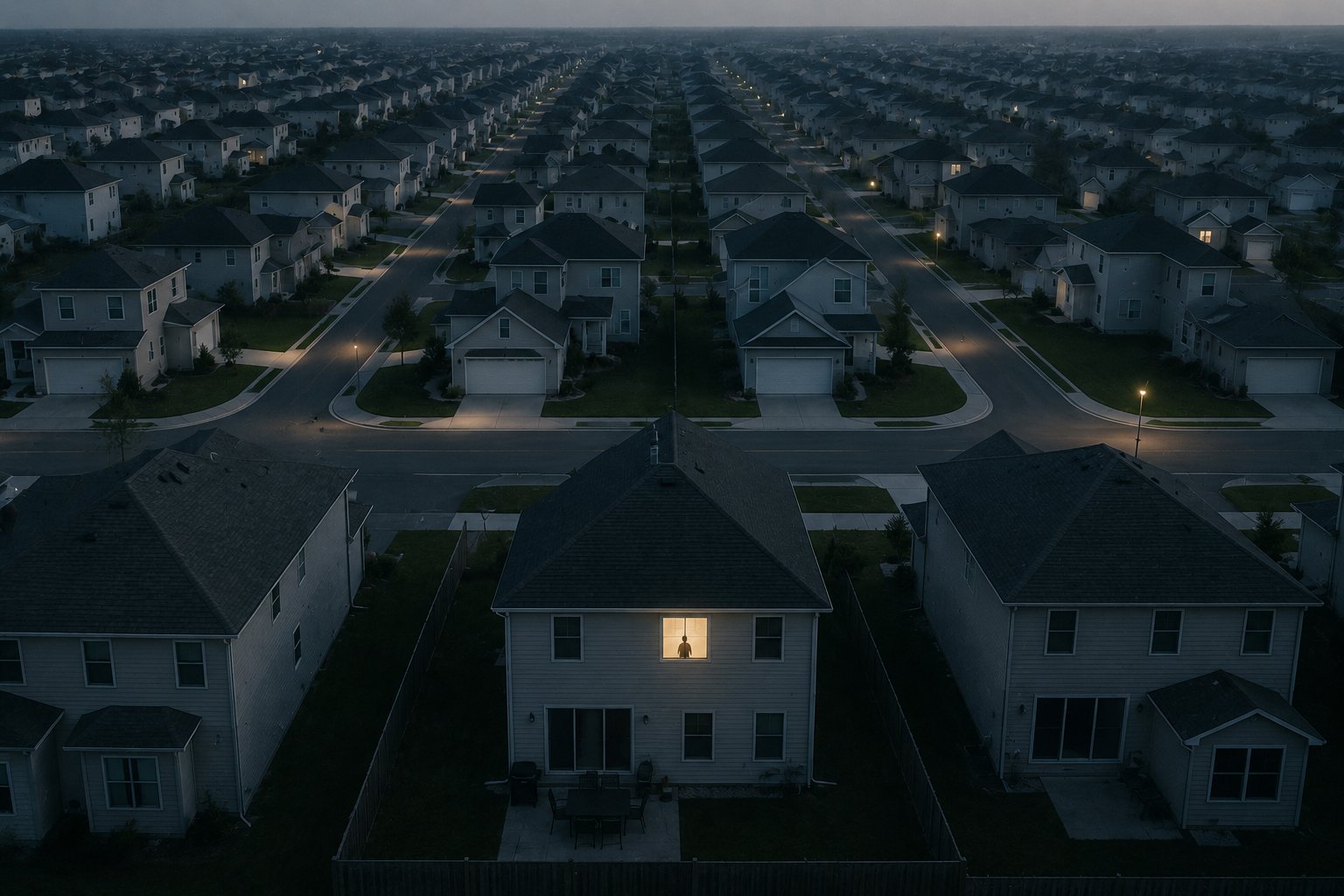
We built suburbs for privacy, quiet, and space — and got loneliness. Sarah Williams, Ethan Kent, and Anne Hendershott examine whether the isolation so many people feel today was actually designed into the landscapes we live in, and whether we can build our way back to connection.
Key Metrics
61%
Individuals feeling lonely
30%
Community spaces in suburbs
45%
Adults living alone
In an age marked by unprecedented connectivity, why do so many people report feeling more isolated than ever? As urban design increasingly favors sprawling suburbs over dense, vibrant communities, the architecture of everyday life may be contributing to this paradox of loneliness.
Context
The issue of urban isolation has gained traction in recent years, particularly as cities and communities grapple with the long-term impacts of the COVID-19 pandemic. With remote work becoming the norm and social interaction limited, understanding how suburban design influences mental well-being has become increasingly urgent. As cities seek to recover and adapt, the question remains: have we, in our quest for tranquility and space, inadvertently designed isolation into our everyday lives?
Perspective: Sarah Williams
Sarah Williams, the Director at the MIT Media Lab, argues that the physical layout of suburbs contributes to loneliness through the promotion of individualism over community. "Suburban areas are often designed for cars, not for people. This prioritization leads to a lack of communal spaces where serendipitous interactions can occur," she notes. Williams emphasizes that the isolation felt in these environments is compounded by architecture that favors privacy and separation. The result is a society that experiences disconnection amid physical proximity.
Perspective: Ethan Kent
Ethan Kent, Senior Vice President of Project for Public Spaces, offers a different perspective. He contends that while suburban design poses challenges, it also presents opportunities for revitalization. "We can't overlook the potential for creating gathering spaces within suburban contexts. It's about how we choose to activate these spaces to foster community engagement," he asserts. Kent points to successful suburban projects that have transformed neglected areas into vibrant hubs — challenging the notion that isolation is an inherent feature of suburban living.
Perspective: Anne Hendershott
Anne Hendershott, a professor at The King's College, brings a sociological lens to the debate. She suggests that the issues of loneliness in suburbs are intertwined with cultural shifts and declining social capital. "Beyond design, we must consider the role of community engagement and social networks. Suburbia often lacks the interpersonal connections that urban areas naturally foster due to the individualistic lifestyle it promotes," Hendershott argues. She posits that awareness of and intervention in these cultural factors might alleviate feelings of loneliness.
Editorial Synthesis
Where Experts Agree
Suburban design often prioritizes individuality, leading to isolation. The importance of creating communal spaces cannot be understated. Cultural factors play a significant role in shaping how communities engage with one another.
Where Experts Disagree
The extent to which architectural design is the primary contributor to loneliness is debated. Experts also differ on whether revitalization efforts in suburbs can effectively combat isolation, and on the necessity of cultural change versus structural redesign in tackling loneliness.
Why This Matters
Understanding the suburbanization of loneliness is critical as communities seek practical solutions to improve mental health and social connectedness. The differing viewpoints from experts emphasize that addressing loneliness requires a multifaceted approach — one that combines architectural design with cultural awareness and community engagement.
As cities evolve, the opportunity to reimagine suburban landscapes presents a chance to cultivate environments where people feel connected, engaged, and valued. Ultimately, this analysis highlights a pivotal question: can we reshape our everyday life to prioritize human connection over solitude? The answer holds profound implications for the future of urban living.


Editorial Take
Reimagining Suburbia: A Call for Community-Centric Design
Hopeful ProgressRevitalizing suburban design can bridge isolation by fostering community connections.
The debate surrounding the suburbanization of loneliness underscores a critical point: while the physical architecture of suburbs may contribute to isolation, there is significant potential for change. We must prioritize the creation of communal spaces that encourage interaction and connection among residents. As Ethan Kent suggests, reimagining our suburban landscapes into hubs of engagement is not merely a possibility but a necessity for mental well-being. By integrating designs that promote togetherness while respecting the desire for privacy, we can transform the suburban experience from one of isolation to one that fosters community. This shift towards community-centric design invites us to rethink how we shape our environments, ensuring they enhance rather than hinder our social experiences. Our future urban landscapes can be places of both tranquility and connection, but it requires intentional effort and innovative approaches to realize this vision.
What do you think?
Cast your vote on this debate.
References
Continue the Debate
Related topics emerging from this analysis:
Rethinking Public Spaces: Designing Community-Focused Suburbs
Exploring innovative design strategies that can transform suburban areas into vibrant community hubs that encourage social interaction and reduce feelings of isolation.
The Role of Technology in Combating Suburban Loneliness
Examining how digital solutions and social media platforms can be leveraged to foster connections among residents in sparsely populated suburban areas.
Comparative Analysis: Urban vs. Suburban Loneliness
Investigating the differences in loneliness experienced by individuals living in urban versus suburban environments and the factors that contribute to these disparities.
Reviving Community: Case Studies of Successful Suburban Initiatives
Highlighting specific suburbs that have successfully implemented communal spaces or programs that have significantly reduced isolation among residents.