
The Tyranny of the Five-Year Plan: Has Long-Term Goal-Setting Become a Trap Rather Than a Compass?
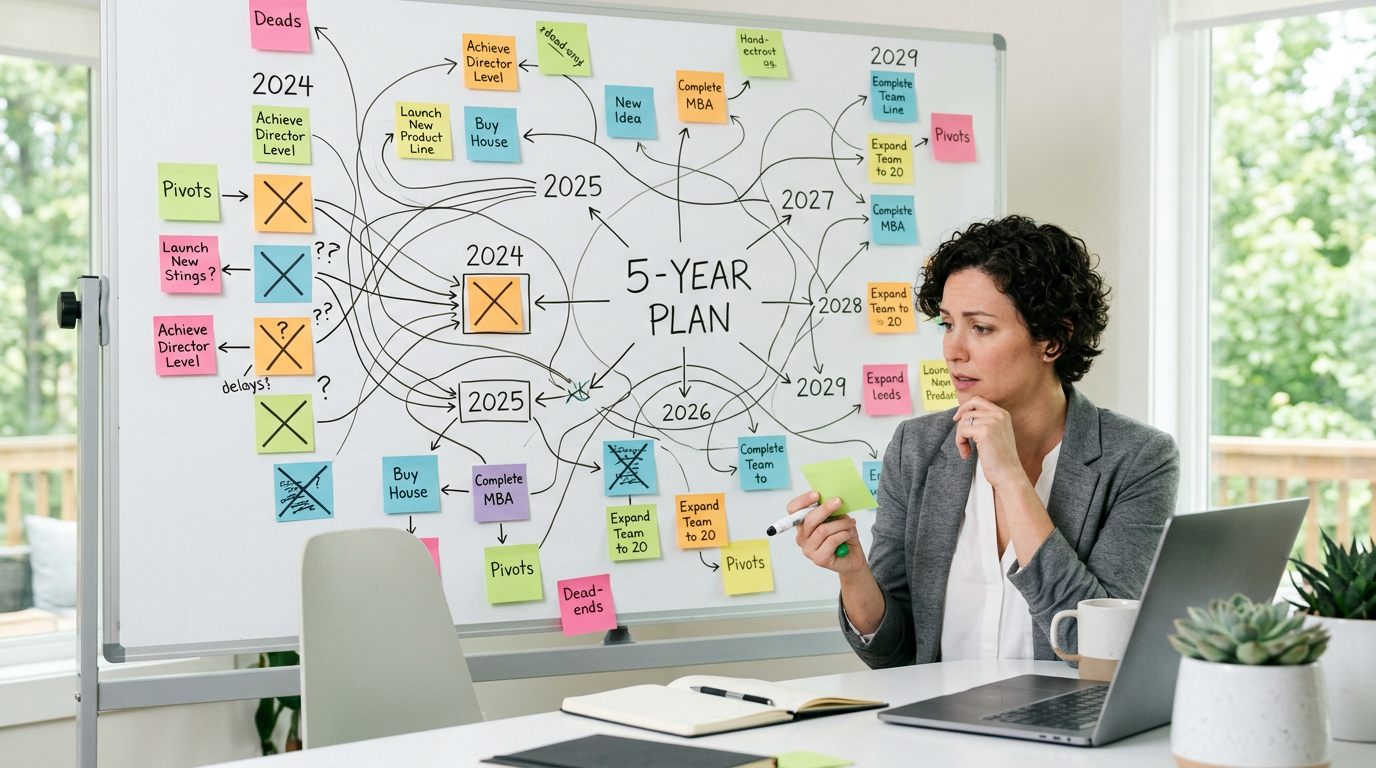
The five-year plan was supposed to be your compass — but in a world that changes faster every year, is it just a beautifully formatted way to lock yourself into yesterday's assumptions? Daniel Pink, Tim Wilson, and Daphne Koller debate whether long-term goal-setting still works, or whether it's quietly become a trap.
Key Metrics
64%
of executives feel traditional goal-setting limits innovation.
85%
of companies have adjusted their strategic plans in the past year.
39%
of employees prefer flexible goal alignment over rigid structures.
In the ever-evolving landscape of business and personal development, one must ask: Are long-term goals a guiding compass, or do they trap individuals and organizations in rigid frameworks that stifle adaptability and innovation? This query gains increased relevance as the pace of change accelerates, putting traditional goal-setting methods under scrutiny.
Context: Why This Matters Now
In a world marked by rapid technological advances, shifting market dynamics, and unpredictable global events, the effectiveness of long-term planning is being questioned. Traditional five-year plans, once heralded as a pathway to success, are now viewed by some as an outdated model capable of constraining creativity and responsiveness.
Perspective: Goals as Essential Tools for Structure and Focus
Daniel Pink, renowned author and speaker, argues that while flexibility is essential, having long-term goals provides critical structure and focus. According to Pink, well-defined goals can enhance motivation and drive clarity of purpose. In his view, one should strive for a balance: fostering adaptability while maintaining a commitment to overarching objectives.
"When individuals know what they're aiming for, it cultivates a sense of autonomy and mastery, key components of motivation," Pink notes. He believes that abandoning long-term planning in favor of short-term objectives may lead to a lack of direction, ultimately hindering growth and innovation.
Perspective: Flexibility and Adaptation Over Fixed Plans
Conversely, Tim Wilson, CEO of Goally, emphasizes the pitfalls of rigid long-term goal setting. He posits that a five-year plan often leads to tunnel vision, causing organizations to overlook emerging opportunities and trends. Wilson advocates for a more fluid approach: setting shorter-term objectives that can pivot as necessary to accommodate unforeseen changes.
"In today's fast-paced environment, sticking to a five-year plan can feel like navigating with a map from 20 years ago," Wilson asserts. By prioritizing flexibility, leaders can better adapt to changing circumstances, fostering environments that are responsive and innovative.
Perspective: A Synergy of Vision and Adaptability
Daphne Koller, co-founder and CEO of Engageli, takes a middle ground approach. She acknowledges the benefits and drawbacks of long-term planning, advocating for a hybrid model that incorporates both steadfast vision and adaptability. Koller insists on the importance of establishing a clear vision that informs short-term actions while allowing for regular adjustments in response to immediate feedback and changing contexts.
"Long-term goals shouldn't be shackles but rather guiding stars that inspire action in real-time," Koller notes, highlighting that the key lies in creating a dynamic system that can adjust as the landscape shifts.
Editorial Synthesis
Where Experts Agree
Long-term goals can provide important structure and clarity. Flexibility is vital in adapting to changing circumstances. A balance between vision and adaptability may lead to optimal outcomes.
Where Experts Disagree
Some see long-term goals as essential, while others view them as restrictive. Opinions vary on whether the trend towards short-term objectives enhances productivity or diminishes accountability. The effectiveness of traditional goal-setting is debated — some experts advocate for its complete overhaul, while others call for refinement rather than rejection.
Why This Matters
The debate surrounding long-term goal-setting resonates deeply in today's volatile environment. Organizations and individuals face decisions with far-reaching implications and must balance ambition with realism. As strategies evolve and the world continues to change, it's crucial to question whether established methods serve as effective compasses or constraining barriers.
Ultimately, the best approach may not be the rigid application of a single philosophy, but rather an adaptive mindset that combines the strengths of both long-term vision and short-term flexibility. In an era marked by uncertainty, developing a nuanced understanding of how to set and pursue goals may prove more vital than ever — urging leaders and individuals alike to reconsider their strategies for the challenges of tomorrow.


Editorial Take
Navigating the Balance Between Structure and Flexibility
Balanced PerspectiveBoth structure and flexibility are essential in effective goal-setting.
In today's fast-paced world, the debate around long-term goal-setting necessitates a nuanced approach. While rigid five-year plans can indeed become traps that hinder innovation and responsiveness, entirely abandoning them can lead to aimlessness. It's crucial for individuals and organizations to strike a balance between maintaining overarching goals and embracing the flexibility to adapt. The key lies in creating dynamic frameworks that allow for ongoing reassessment and adjustment, aligning long-term aspirations with short-term realities. By integrating adaptability into goal-setting, we can harness the motivational benefits of having a clear direction while remaining open to new opportunities and challenges. Thus, rather than viewing long-term goals purely as constraints, we should see them as guides that can evolve alongside the changing landscape of our aspirations.
What do you think?
Cast your vote on this debate.
References
Continue the Debate
Related topics emerging from this analysis:
Short-Term Wins vs. Long-Term Vision: Striking the Right Balance
Exploring how businesses can integrate short-term goals with long-term aspirations to foster innovation while maintaining direction.
The Role of Technology in Goal Setting: A Double-Edged Sword
Investigating how emerging technologies can both enhance and complicate the process of setting and achieving long-term goals.
Cultural Influences on Goal-Setting Practices: A Global Perspective
Examining how different cultures approach long-term goal setting and flexibility, and the implications for multinational organizations.
Measuring Success: Redefining Metrics in a Rapidly Changing World
Discussing the need for new metrics to evaluate success in environments where traditional long-term planning may no longer apply.